


Labels do more work than most people notice. One small piece of fabric carries identity, instructions, and brand personality. Almost 78% of shoppers check labels before they make a decision. That number alone shows how serious this tiny detail becomes in the garment industry.
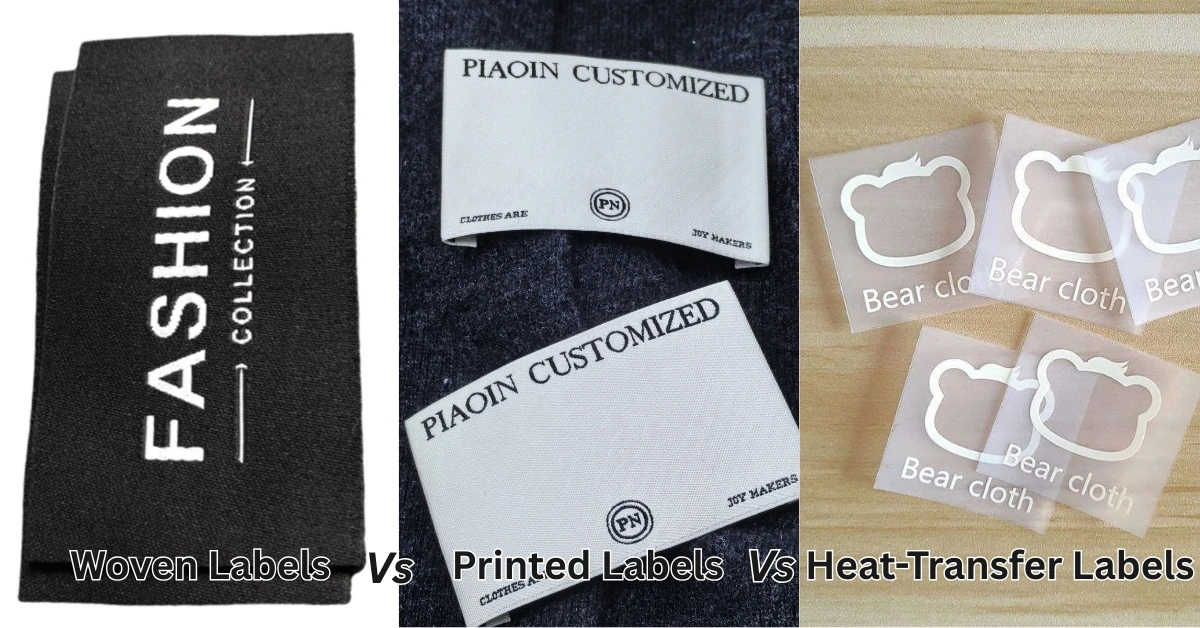
In this guide, I explain the differences between woven, printed, and heat-transfer labels in a clear and engaging tone, incorporating a touch of personality and data to help you choose the right one.
Table Of Contents
Clothing Label Categories
Why Labels Matter
Labels guide buyers. They protect brand value. They even influence comfort. Each label type comes with a unique structure, application process, and durability level. Think of them as three siblings with different temperaments but the same family roots.
Key Factors That Separate Label Types
- Material
- Printing or weaving method
- Durability
- Visual clarity
- Touch and feel
These factors build the foundation for each label category.
Woven Labels
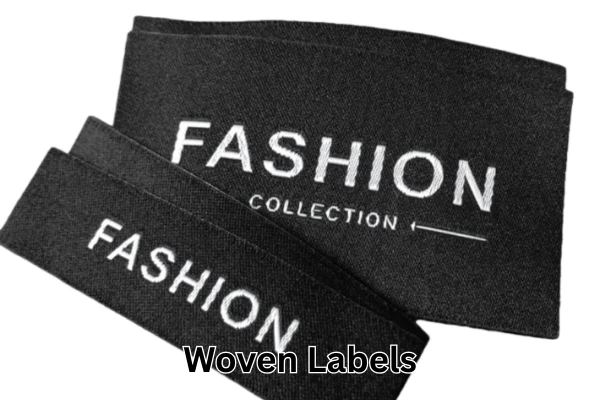

What Is a Woven Label?
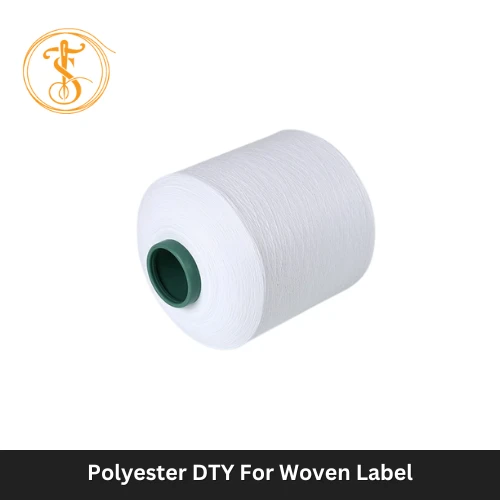
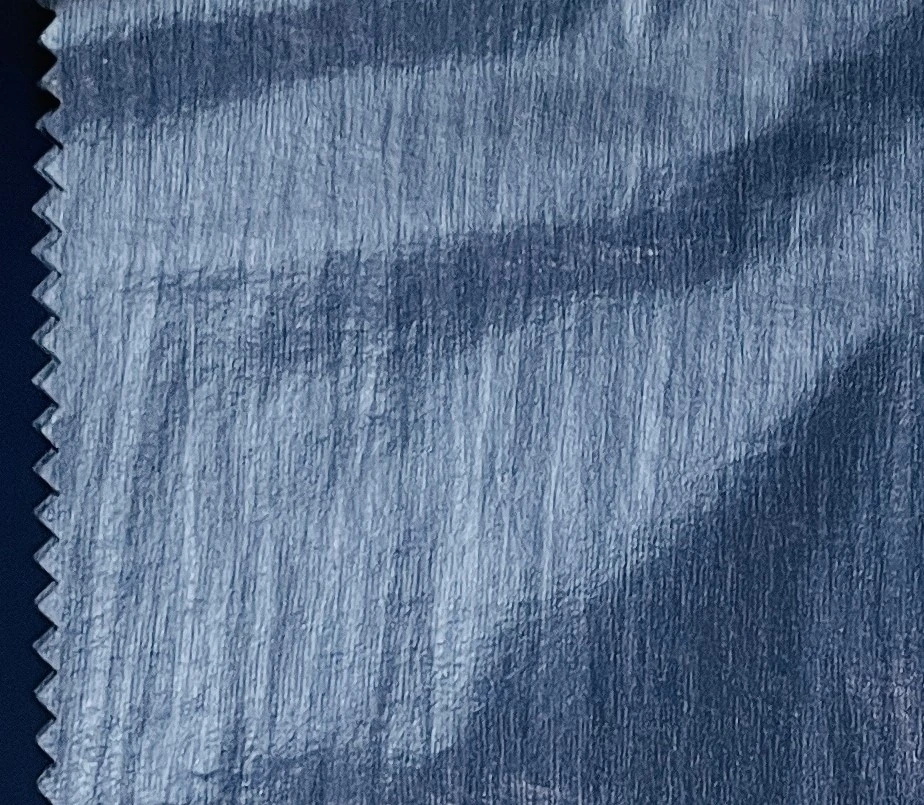
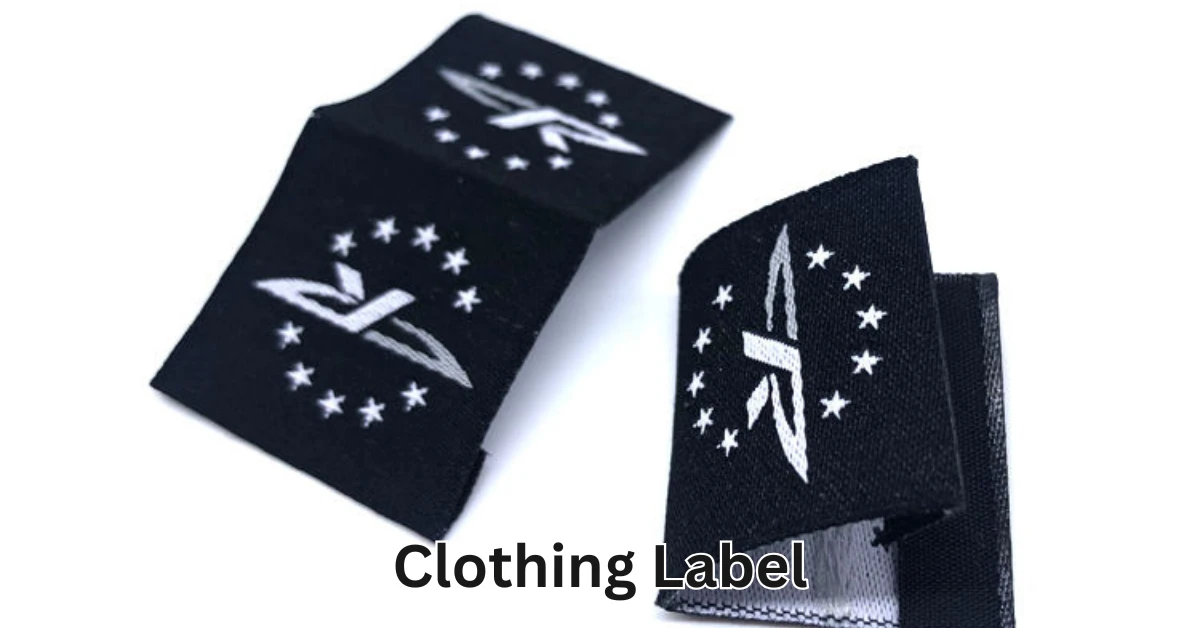
A woven label forms through the interlacing of yarns like polyester, cotton, or Tencel. The text or logo integrates into the fabric itself. Around 60% of premium apparel brands choose this label type because of longevity and aesthetics.
Features of Woven Labels
-
Durability
A woven label often lasts 200+ wash cycles with very little fading.
-
Texture
It offers a soft yet slightly raised feel, depending on yarn denier.
-
Color Capabilities
Most factories allow up to 12 yarn colors per design.
Advantages of Woven Labels
- Long-lasting
- Premium appearance
- Fade-resistant
- Suits brand logos
Limitations of Woven Labels
- Higher production cost
- Limited micro-detail reproduction
- Longer lead time due to weaving setup
Printed Labels
What Is a Printed Label?
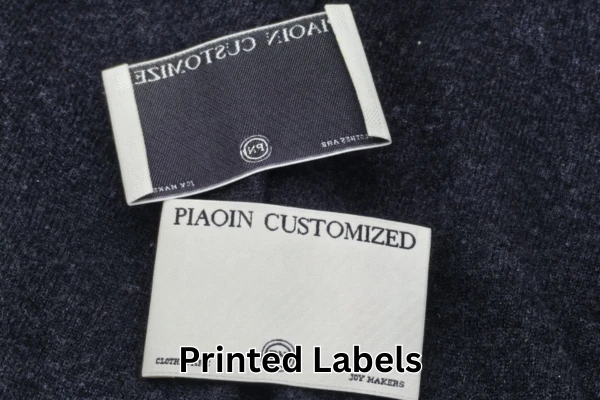
Printed labels use screen printing, flexo printing, rotary printing, or digital printing. The ink stays on top of satin, nylon, or polyester tapes. Nearly 50% of fast-fashion brands pick printed labels because they cost less.
Features of Printed Labels
-
Soft Surface Feel
Printed labels are extremely smooth and light, ideal for sensitive garments.
-
High Graphic Detail
They reproduce tiny elements and gradients with accuracy.
-
Unlimited Color Range
Digital printing supports full-color options without restrictions.
Advantages of Printed Labels
- Affordable
- Perfect for complex artwork
- Soft on skin
- Quick turnaround time
Limitations of Printed Labels
- Fades after 50–80 washes
- Ink may crack with rough handling
- Less durable than woven labels
Heat-Transfer Labels
What Is a Heat-Transfer Label?
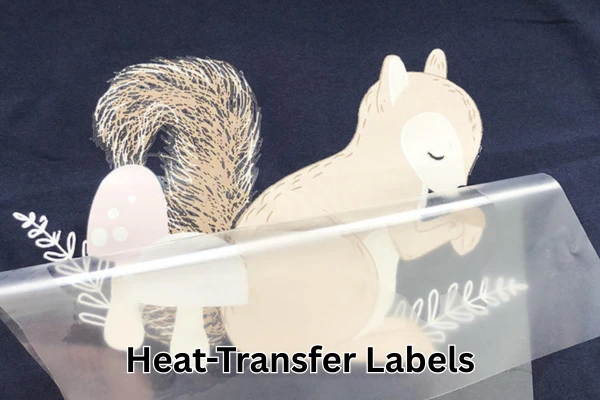
A heat-transfer label applies the design to the garment through heat and pressure. The graphic bonds to the fabric surface through a special adhesive layer. Nearly 70% of sportswear brands use this label because it avoids inside-neck irritation.
Features of Heat-Transfer Labels
-
Tagless Comfort
The label becomes part of the fabric. No scratchy edges.
-
Strong Bonding Strength
High-quality heat transfers withstand 100–150 washes before fading.
-
Modern Appearance
These labels give a clean, minimal, tagless look.
Advantages of Heat-Transfer Labels
- Zero irritation
- Ideal for activewear
- Clean aesthetic
- Smooth and modern finish
Limitations of Heat-Transfer Labels
- May crack with high-heat ironing
- Adhesive quality varies across suppliers
- Not ideal for textured fabrics
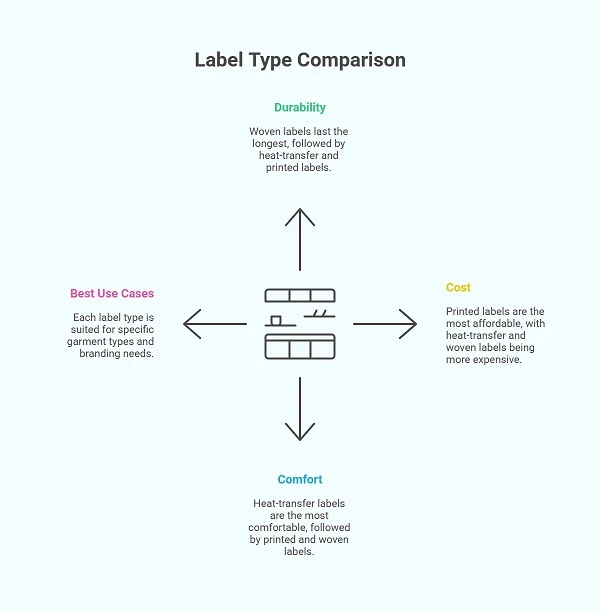
Comparison Between Woven, Printed, and Heat-Transfer Labels
|
Criteria |
Woven Labels |
Printed Labels |
Heat-Transfer Labels |
|
Durability (Wash Cycles) |
200+ washes |
50–80 washes |
100–150 washes |
|
Cost Level |
High |
Low |
Medium |
|
Cost Ranking |
3rd (Highest) |
1st (Lowest) |
2nd (Medium) |
|
Skin Comfort Rating |
7/10 |
8/10 |
9/10 |
|
Texture & Feel |
Slightly textured, premium |
Smooth and soft |
Tagless, ultra-smooth |
|
Visual Appearance |
Woven, textured look |
Flat printed look |
Clean, modern finish |
|
Best Use Cases |
Premium shirts, denim, jackets, and high-end branding |
Kidswear, lingerie, mass-market garments, complex artwork |
Sportswear, activewear, seamless garments, performance fabrics |
|
Ideal Brand Positioning |
Premium and luxury brands |
Budget and mid-range brands |
Performance and athletic brands |
Conclusion
Each label type serves a different mission. Woven labels add elegance and long-term durability. Printed labels fit when the budget drops or the logo demands finer detail. Heat-transfer labels give tagless comfort that activewear customers love. The best choice depends on your garment, your brand, and the experience you want your buyer to feel.
FAQs
1. Which label lasts the longest?
Woven labels last the longest, often surviving 200+ wash cycles.
2. Which label suits sportswear best?
Heat-transfer labels because they offer a tagless, irritation-free feel.
3. Are printed labels safe for kidswear?
Yes. They are soft, lightweight, and cost-effective.
4. Can heat-transfer labels crack?
Yes, especially under high ironing temperatures or poor adhesive quality.
5. Which label feels most premium?
Woven labels carry the most premium look due to their textured, stitched finish

Comments - 00
Leave A Reply
Thanks for choosing to leave a comment.