



Table Of Contents
Why Should You Care?
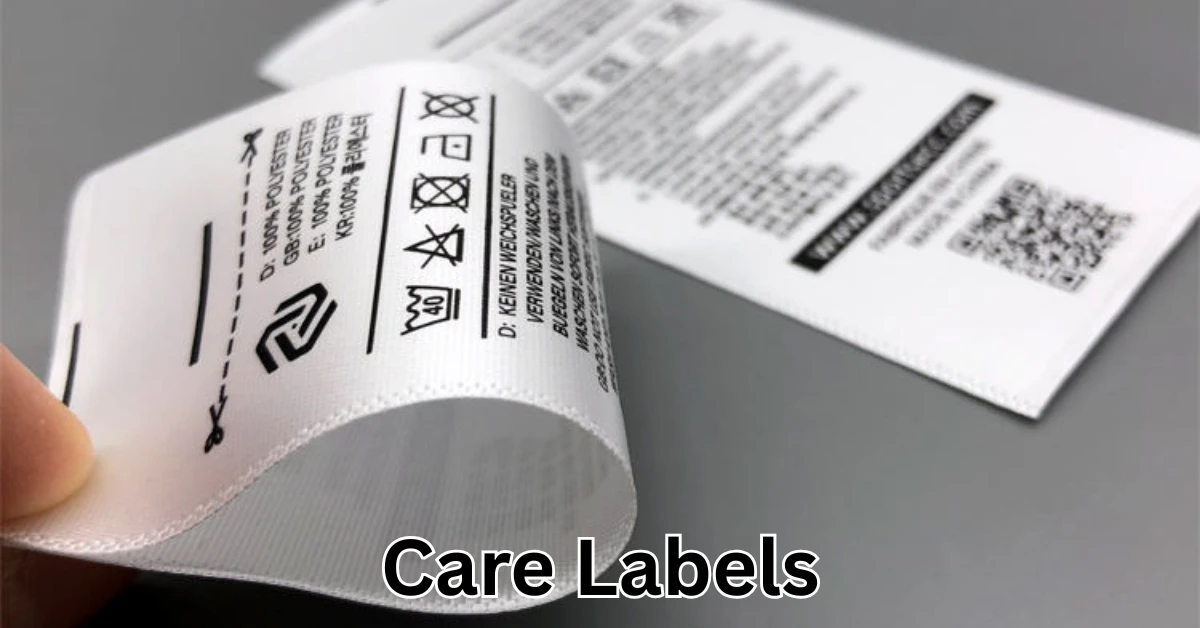
Care labels tell you how to look after a garment. They reduce damage risk. They save money. They also prevent wardrobe heartbreak. The term care labels covers wash, bleach, dry, iron, and professional care symbols. These icons follow an international standard. That standard helps brands and users speak the same laundry language.
Why Care Labels Matter?
Safety And Lifespan Of Garments
A correctly followed care label can extend a garment's life by 2× to 3× versus random laundry. Fabrics such as wool, silk, and technical blends react differently to heat and chemicals. Wrong wash or high dryer heat can shrink a garment by 5–20%, or ruin finishes such as water-repellent coatings.


Consumer Law And Compliance Basics
Many markets require clear care instructions on textile products. A missing or wrong care label can trigger returns or fines. Brands that follow ISO symbols reduce legal exposure and lower return rates by measurable amounts.
5 Groups Of ISO Washing Symbols
ISO care symbols are divided into five groups. These groups cover most care needs. They are: wash, bleach, tumble dry, iron, and professional textile care.
Washing Symbols (Water Tub)
The water tub icon shows the wash method. A plain tub means machine wash. A tub with a hand means hand wash only. Numbers or dots inside a tub set the temperature or mildness.
Temperature Dots And Cycles Explained
- One dot = low heat (approx 30°C).
- Two dots = medium heat (approx 40°C).
- Three dots = high heat (approx 60°C).
- A crossed-out tub = do not wash.
Some labels show a number such as 30 or 40. That number gives the maximum water temperature in Celsius.
Bleaching Symbols (Triangle)
A triangle tells the bleach use.
Safe Bleach Vs Do Not Bleach
- Open triangle = any bleach allowed.
- Triangle with two lines = only non-chlorine bleach.
- Crossed triangle = do not bleach.
The wrong bleach choice can remove dye or weaken fibers. A small test on a hidden seam helps.
Tumble Dry Symbols (Square With Circle)
The tumble dry icon shows dryer use.
Heat Levels And No Tumble Dry Sign
- One dot in a circle = low heat.
- Two dots = medium heat.
- Three dots = high heat.
- Crossed square = do not tumble dry.
- Square with lines = natural dry options such as dry or line dry.
Heat from a dryer can shrink or warp some fibers. Air dry for delicate or mixed fiber items.
Ironing Symbols (Iron)
The iron icon shows if and how to press.
Steam Dot Code And No-iron Mark
- One dot = low temperature (synthetics).
- Two dots = medium (wool, cotton blends).
- Three dots = high (linen, cotton).
- Crossed iron = do not iron.
Avoid steam on coated fabrics. A press cloth adds protection.
Professional Textile Care (Circle)
A circle means professional service. It covers dry cleaning and wet cleaning.
Wet Cleaning, Dry Clean Codes, And Restrictions
- Plain circle (P or F) = dry clean with specific solvents. The letter shows the solvent type.
- Circle with W = professional wet clean.
- Crossed circle = do not dry clean.
Professional care helps for suits, heavy coats, and some blends.
How To Read Combined Symbols On A Single Label?
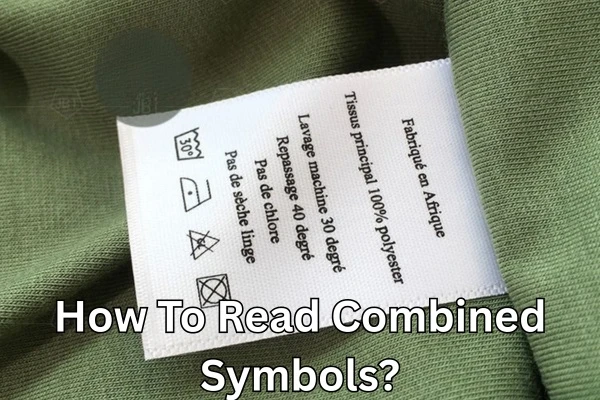
Multiple symbols form a care plan. Read left to right or top to bottom. Start with the wash rules. Then check the bleach. Next, read dry and iron. Finish with professional care.
Example: Shirt Label Explained Step By Step
- Label shows: tub with 40, triangle with two lines, square with circle and one dot, iron with two dots, circle P.
- This reads: machine wash at 40°C, non-chlorine bleach only, tumble dry low, iron medium, dry clean with P solvent if needed.
Quick Checklist For Laundry Success
- Check the fabric fiber list.
- Read icons in order.
- Sort by temperature needs.
- Use mild detergent for delicate fibers.
- Air dry when unsure.
Tips For Brands And Home Users
For Technologists: Label Placement And Material
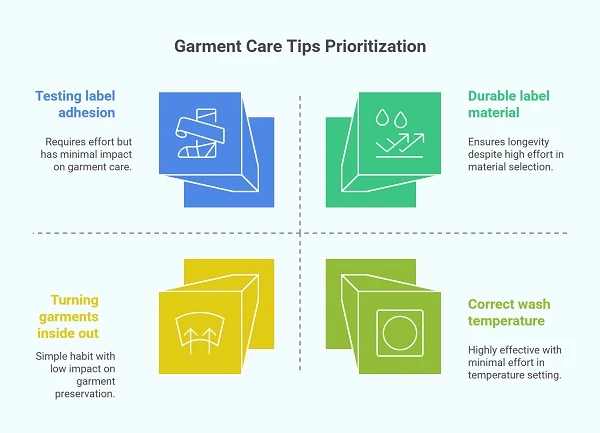
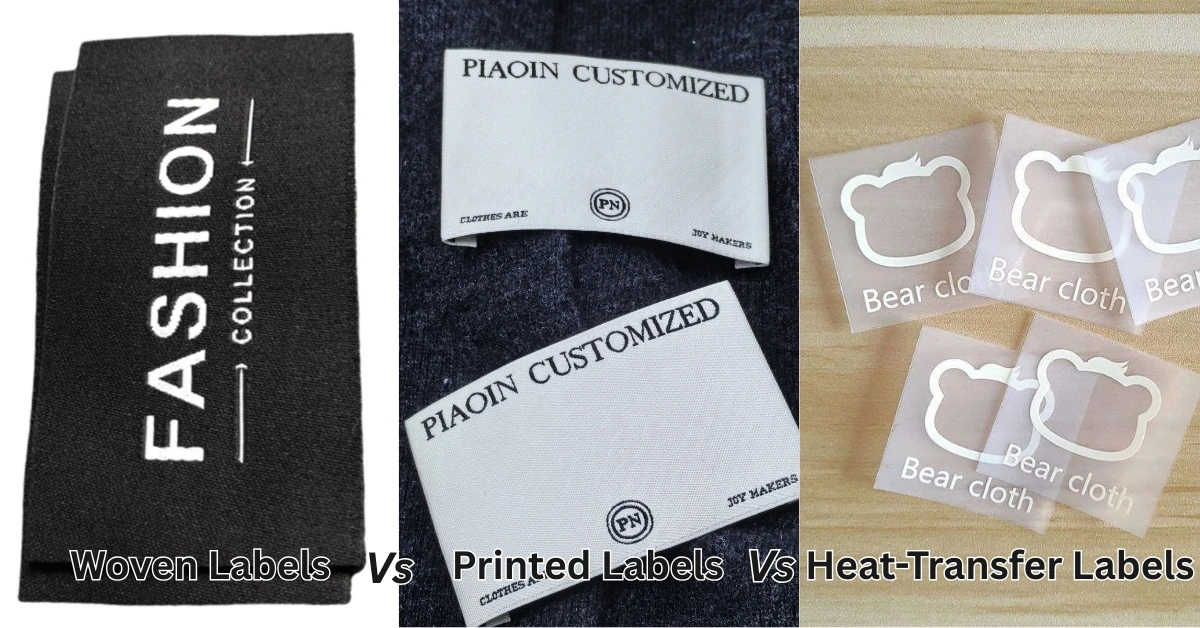
Place the label where a user can find it at first wear. Use a durable material for the label. Labels must survive at least 30 washes. Print symbols in high contrast. Test label adhesion on trims and seams. Use the correct ISO symbol set to avoid confusion.
For Users: Small Habits That Save Garments
- Turn garments inside out.
- Fasten zippers and buttons.
- Use mesh bags for small items.
- Use the correct wash temperature.
- Skip the dryer for delicate fabrics.
A simple habit saves time and money. You avoid faded prints and distorted shapes.
Common Myths And Mistakes
- Myth: Cold wash cleans less.
Truth: Cold wash removes many soils with modern detergents. Use warm only when oil or stubborn stains show. - Myth: All cotton tolerates hot water.
Truth: Pre-treated or blended cotton can shrink. Always follow the label. - Mistake: Ignore the circle symbol.
Tip: A circle gives dry-clean details. Ignore it, and you risk irreversible damage.
Conclusion
Care labels exist to help. They lower risk. They prolong garment life. Learn the five main groups: wash, bleach, tumble dry, iron, and professional care. Remember dots and letters. Use the quick checklist. Small habits give big returns. Treat a label like a map. It guides you to better laundry results.
FAQs
1. What do the dots on the wash and iron symbols mean?
Dots show heat level. One dot means low. Two dots mean medium. Three dots mean high. They guide safe temperature choices.
2. Are ISO washing symbols universal?
Yes. ISO symbols aim to give one clear set. Some regions add text. Symbols remain the anchor for care.
3. Can I ignore a care label for towels or sheets?
You can, at your risk. Towels and sheets often take higher heat. Still check for finishes like fire-retardant or waterproof layers.
4. What if a garment has no label?
Follow fabric type clues. Test on an inside seam. When in doubt, wash at low temperature and air dry.
5. Do professional care symbols affect home laundering?
Yes. A dry-clean symbol means the item may react badly to water or home solvents. A wet-clean symbol suggests a specialist machine. When unsure, consult a cleaner.


Comments - 00
Leave A Reply
Thanks for choosing to leave a comment.