


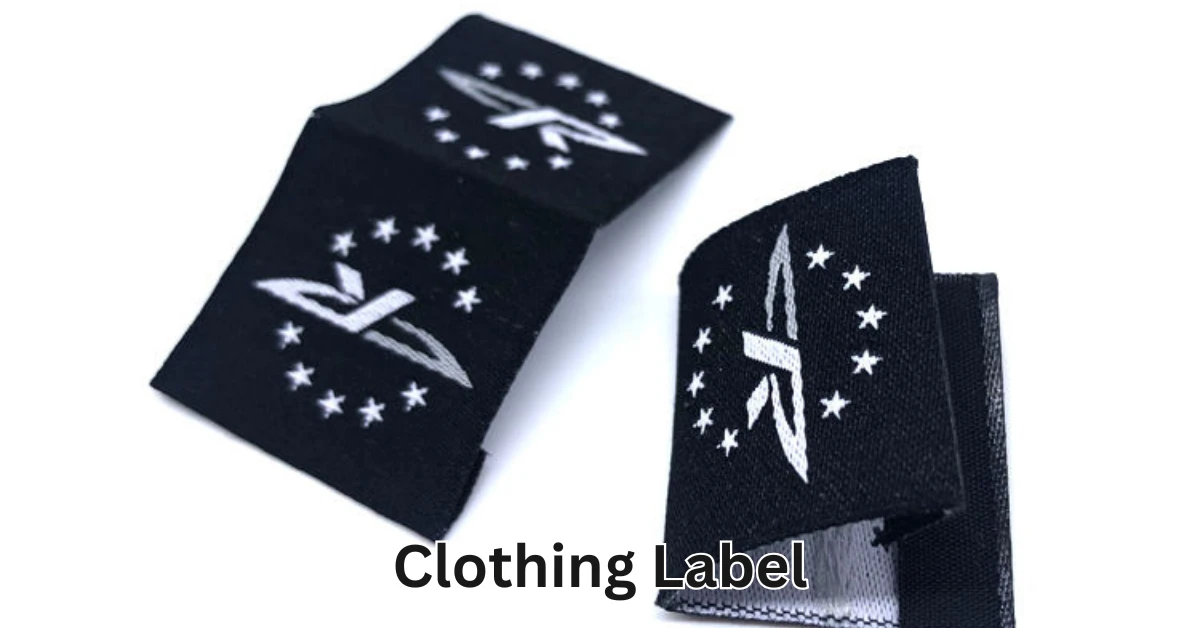
A clothing label seems tiny at first glance, yet it controls the story of the garment. It guides buyers, protects brands, and supports legal compliance. Data shows that 78% of shoppers read at least one label before a purchase. That proves how powerful a small tag can be.
Table Of Contents
What Is a Clothing Label?
A clothing label is a small tag placed inside or outside garments that carries essential product information. Most export markets treat it as mandatory. Nearly 90% of global textile shipments require standardized labeling to enter the market.
Key Elements Found in a Clothing Label
- Brand name
- Fiber content
- Care instructions
- Size
- Country of origin
- Certifications
- Batch or tracking codes
Why Labels Matter in Apparel Production?
Labels help buyers understand the garment. They support legal compliance and reduce returns. EU safety reports show that 1 out of 14 rejected shipments fails because of incorrect or incomplete labeling.
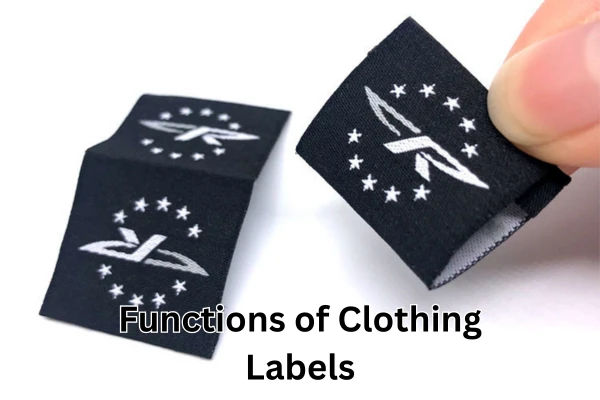
Functions of Clothing Labels
.webp)

Clothing labels take on multiple roles. They support product clarity, branding, safety, and traceability.
Brand Identity
A label works as a brand’s signature. Many premium brands spend 2–3% of total garment cost on label quality alone.
Product Information
Fiber percentages affect feel, shrinkage, stretch, and durability. A clear label removes doubt. A tee with 95% cotton + 5% elastane behaves very differently from one with 100% polyester.
Care Guidance
Care symbols extend garment life by up to 41% according to textile lab trials. The right wash cycle or ironing temperature saves countless shirts.
Legal Requirements
Countries like the US, Canada, Japan, and EU states regulate labeling. Fiber tolerance usually stays within ±3%. Any mismatch can trigger penalties.
Traceability
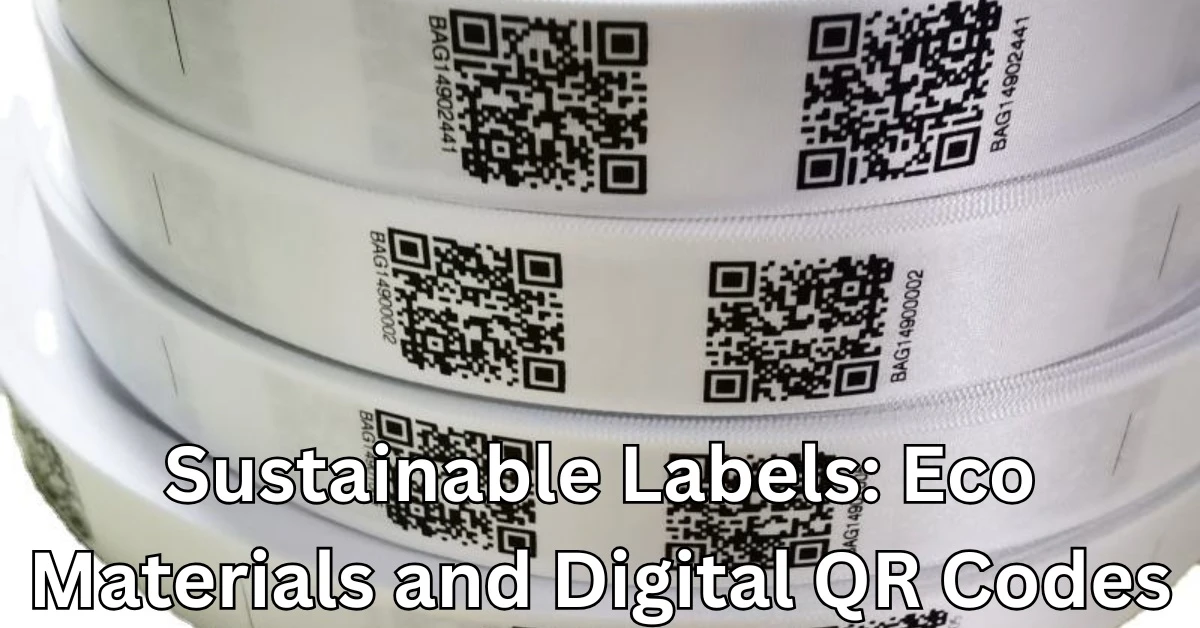
Modern factories use QR codes, RFID tags, and batch numbers. About 32% of global apparel brands use digital labeling for supply chain accuracy.
Types of Clothing Labels
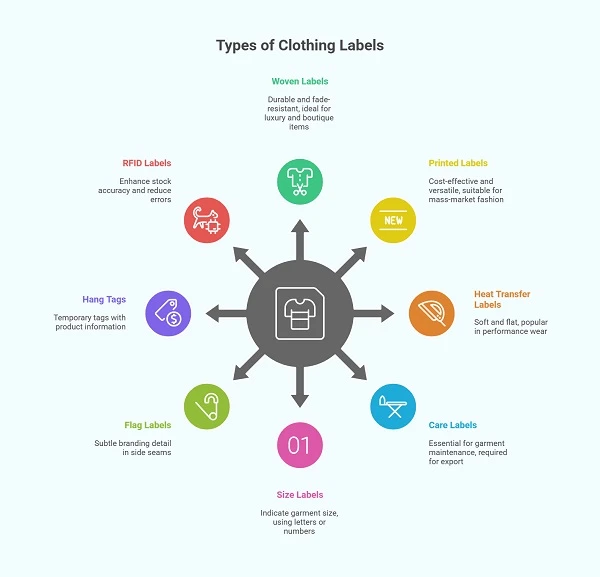
Labels differ based on production method, material, placement, and purpose.
Woven Labels
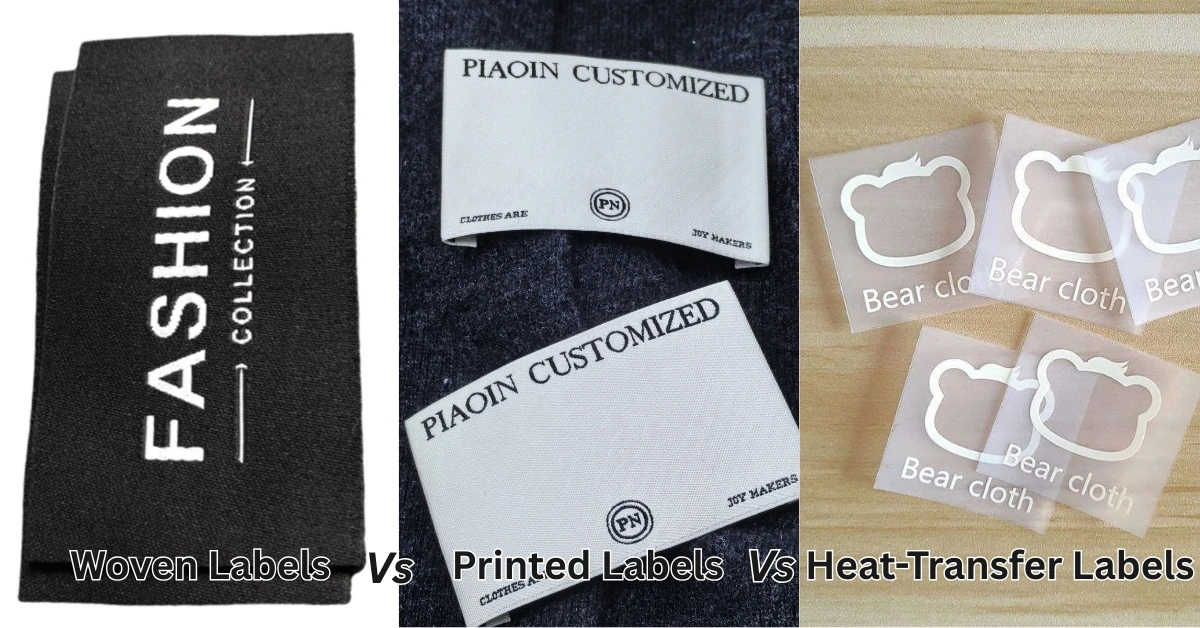
Woven labels use threads to create the design. They last long and resist fading.
Where Woven Labels Work Best?
Printed Labels
Printed labels use ink on satin, cotton, polyester, or nylon tape. They cost less and allow faster production.
Best Uses for Printed Labels
- Undergarments
- Sleepwear
- Mass-market fashion
- Sportswear
Heat Transfer Labels
Heat transfer labels stay flat and feel soft. More than 60% of performance wear brands now use them.
Common Applications
- Activewear
- Swimwear
- Compression garments
Care Labels
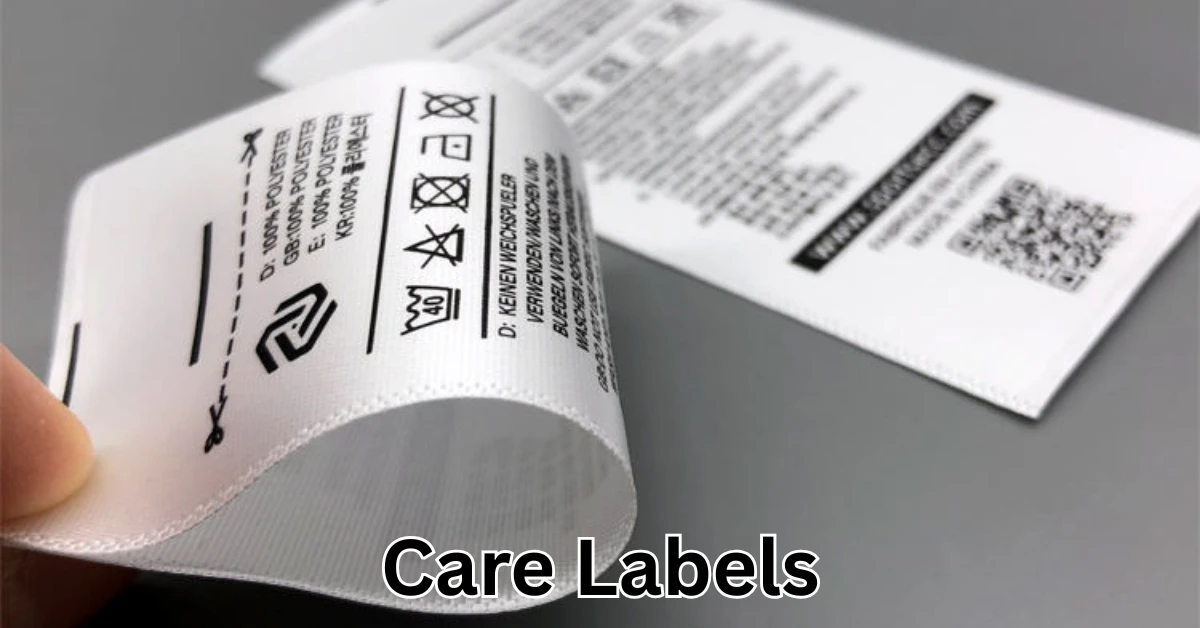
These labels follow ISO 3758 standards. Export garments cannot ship without them.
Required Care Label Details
- Wash method
- Bleach instructions
- Dry method
- Iron temperature
- Professional cleaning notes
Size Labels
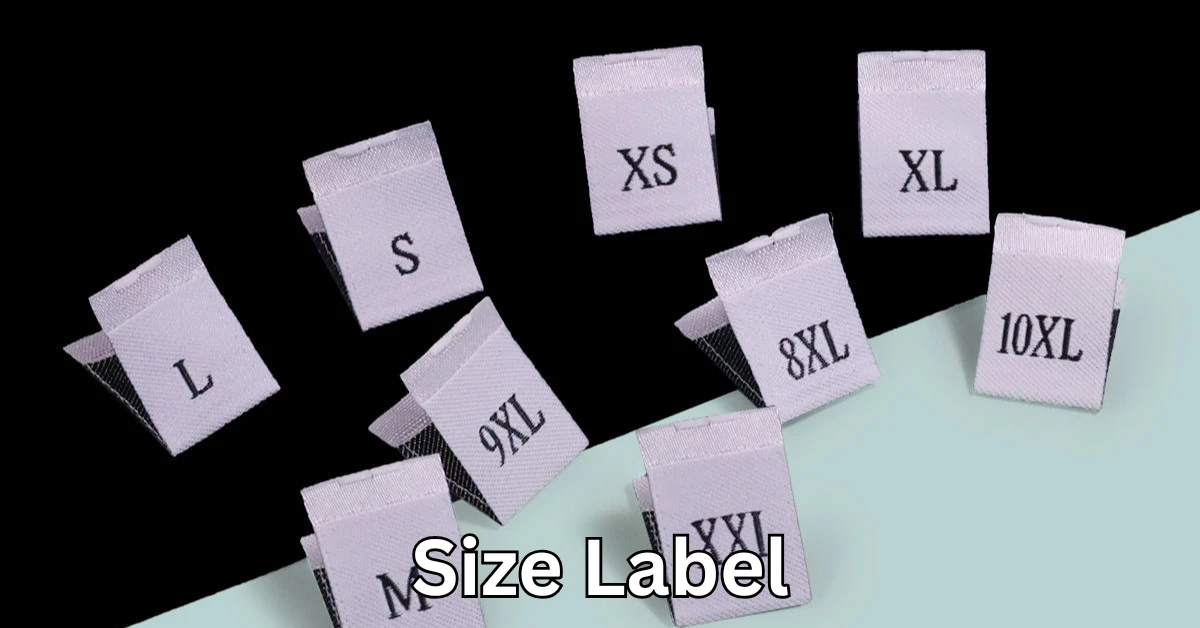
Brands use either letter sizing (S–XL) or numeric sizing (28–36). Global brands use dual systems for clarity.
Flag Labels
Flag labels sit in the side seam. They work as a subtle branding detail.
Hang Tags
Hang tags are temporary and hold product stories, pricing, and barcodes. About 52% of buyers prefer eco-friendly hang tags.
RFID Labels
RFID labels improve stock accuracy and reduce human error by 70%. Retail giants rely on them heavily.
How Clothing Labels Influence Buyers?
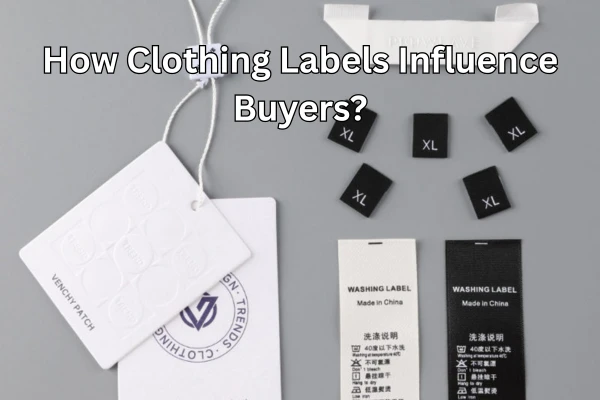
Labels affect purchase decisions more than most brands assume.
Emotional Value
A neat label gives a sense of reliability. Humans judge fast—sometimes in under 3 seconds.
Quality Perception
A rough or faded label signals low quality. A clean, soft label suggests care, precision, and brand responsibility.
How Brands Choose the Right Clothing Label?
Label selection depends on product category, budget, and brand hierarchy.
Factors That Guide Label Selection
- Fabric type
- Price range
- Target market
- Brand philosophy
- Sustainability goals
Conclusion
A clothing label does far more than display a name. It shares identity, gives instructions, ensures compliance, and strengthens trust. It guides buyers and protects brands. With the right label, a garment feels complete. With the wrong one, even a great product loses value fast.
FAQs
1. Is a clothing label mandatory?
Yes. Most export markets require detailed labels for legal compliance.
2. Which label lasts the longest?
Woven labels offer the longest durability, especially for high-wash garments.
3. Do heat transfer labels fade?
Not easily. High-quality heat transfers can last over 50+ wash cycles.
4. Why do brands use RFID labels?
RFID reduces inventory errors, supports automation, and improves tracking accuracy.
5. Can hang tags be eco-friendly?
Yes. Many brands use recycled kraft paper or biodegradable materials for sustainability.


Comments - 00
Leave A Reply
Thanks for choosing to leave a comment.