




Garment sizing looks simple from the outside. You see a tiny label with “M” or “L,” and you assume that is the full story. But behind that small tag lives a world of measurement tables, fit trials, customer expectations, and a surprising number of numbers. Let’s unpack it with clarity and a little personality.
Table Of Contents
What Is a Size Label?
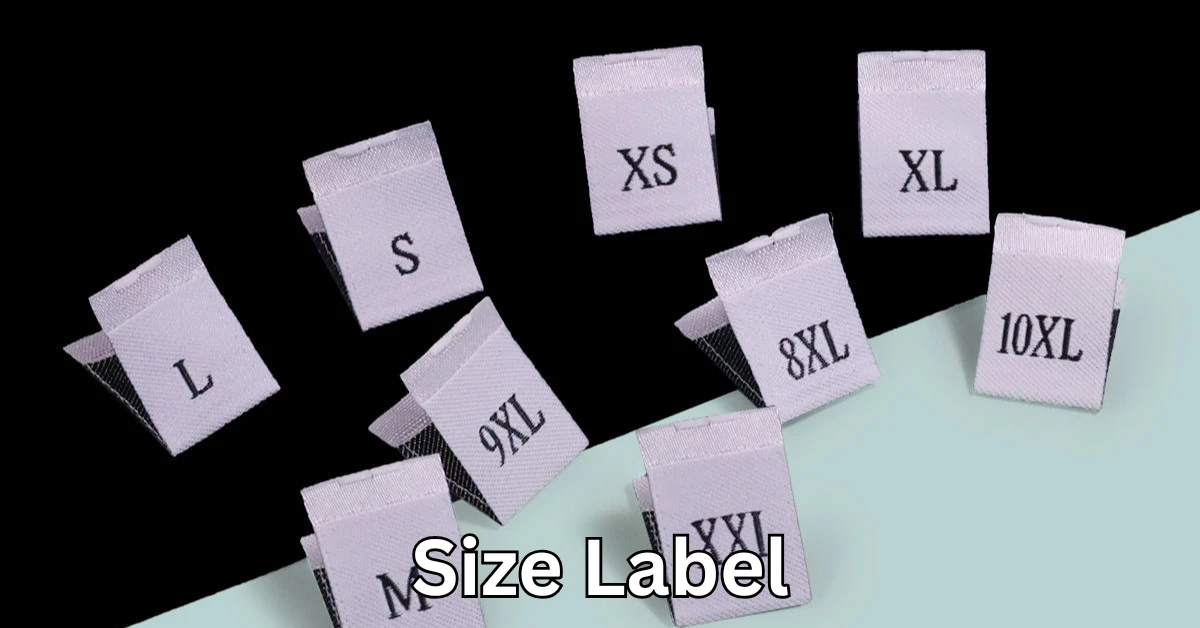
A size label is located inside the garment and indicates the size of the product. It tells the buyer whether the piece fits their body measurements. In most markets, size labels follow codes like XS, S, M, L, XL, or numeric indicators like 30, 32, 34.
Why Size Labels Matter?
A size label does more than display a number. It affects:
- Customer confidence
- Brand consistency
- Return rates
- Fit expectations
One study from a US retail survey shows that 27% of online returns come from size mismatch. That small tag can lead to significant profit loss.
Types of Size Labels
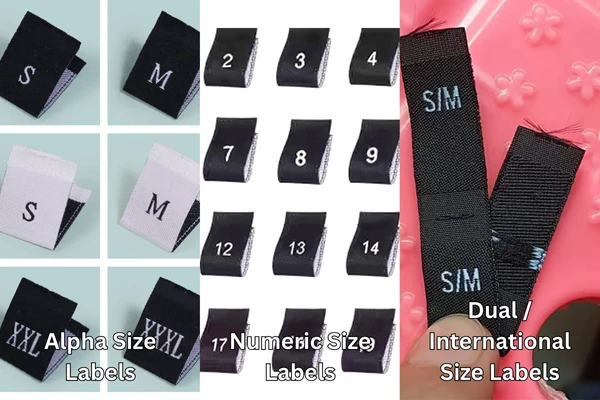
Alpha Size Labels
XS, S, M, L, XL. These work well for T-shirts, knitwear, and relaxed fits.
Numeric Size Labels
Sizes like 30, 32, 34 suit denim, trousers, and tailored garments. These depend on precise body regions such as the waist or the chest.
Dual / International Size Labels
Formats like M/40 or L/42 help brands sell in global markets with varying sizing systems.
Key Measurements Behind Size Labels
A size label looks simple, but behind that one code sits a long list of numbers. A base measurement chart often includes:



- Chest
- Waist
- Hip
- Across shoulder
- Sleeve length
- Inseam
- Garment length
A standard men’s medium shirt typically sits near:
- Chest: 100–102 cm
- Shoulder: 44–46 cm
- Sleeve: 61–63 cm
Even a 0.5 cm shift affects fit noticeably.
Why Standardization Is Necessary?
Without sizing standardization:
- One brand’s “M” can feel like another brand’s “XL.”
- Customer trust drops.
- Returns spike.
- Production teams repeat mistakes.
Data from the European Clothing Association shows size inconsistency increases return rates by 18–22%.
How to Standardize Garment Sizes?
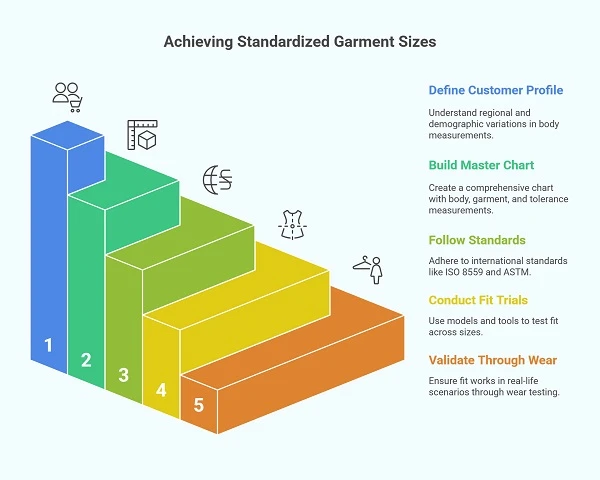
Standardization keeps sizing consistent across styles, factories, and collections.
Step 1: Define Your Target Customer Profile
Body measurements vary widely by:
- Region
- Age
- Body shape
- Gender
For example, the Asian average male chest size stays 4–6 cm smaller than Western averages. A single chart cannot fit all markets.
Step 2: Build a Master Measurement Chart
A master chart includes:
- Body measurement
- Garment measurement
- Tolerances (+/- 0.5–1.0 cm)
- Grade rules (how much each size increases)
Example Grade Rule
For men's shirts:
S → M = +4 cm in chest
M → L = +4 cm
L → XL = +4 cm
Equal steps maintain a predictable fit.
Step 3: Follow International Standards
Most global brands refer to:
- ISO 8559
- ASTM D5585 (women)
- ASTM D6240 (men)
Almost 70% of global brands adopt at least one of these for consistency.
Step 4: Conduct Fit Trials
A standard fit trial includes:
- Live models
- Dress forms
- 3D fitting tools
Brands usually test with 3–5 models across a size cluster to ensure a realistic fit.
Step 5: Validate Through Wear Testing
Wear tests are often run for:
- 1–2 weeks for casual garments
- 3–4 weeks for performance garments
This ensures the fit works not only in a studio but in real life.
Conclusion
A size label may look tiny, but it carries major responsibility. When brands standardize sizing, they cut return rates, keep customers happy, and build stronger trust. The process uses numbers, data, and real bodies—not assumptions. With clear charts, proper grading, fit trials, and international guidelines, sizing becomes a science instead of guesswork.
FAQs
1. Why do size labels vary across brands?
Different brands follow different measurement charts, fit philosophies, and regional body data.
2. Are alpha sizes or numeric sizes more accurate?
Numeric sizes give more precision, especially for denim and tailored items, while alpha sizes suit relaxed garments.
3. How often should brands update their measurement charts?
Every 1–2 years, depending on customer feedback and regional size trends.
4. What is the biggest cause of size inconsistency?
Incorrect grading rules and lack of standardized fit trials.
5. Does international sizing help reduce returns?
Yes. Dual labeling reduces confusion and increases buyer confidence across different markets







Comments - 00
Leave A Reply
Thanks for choosing to leave a comment.