




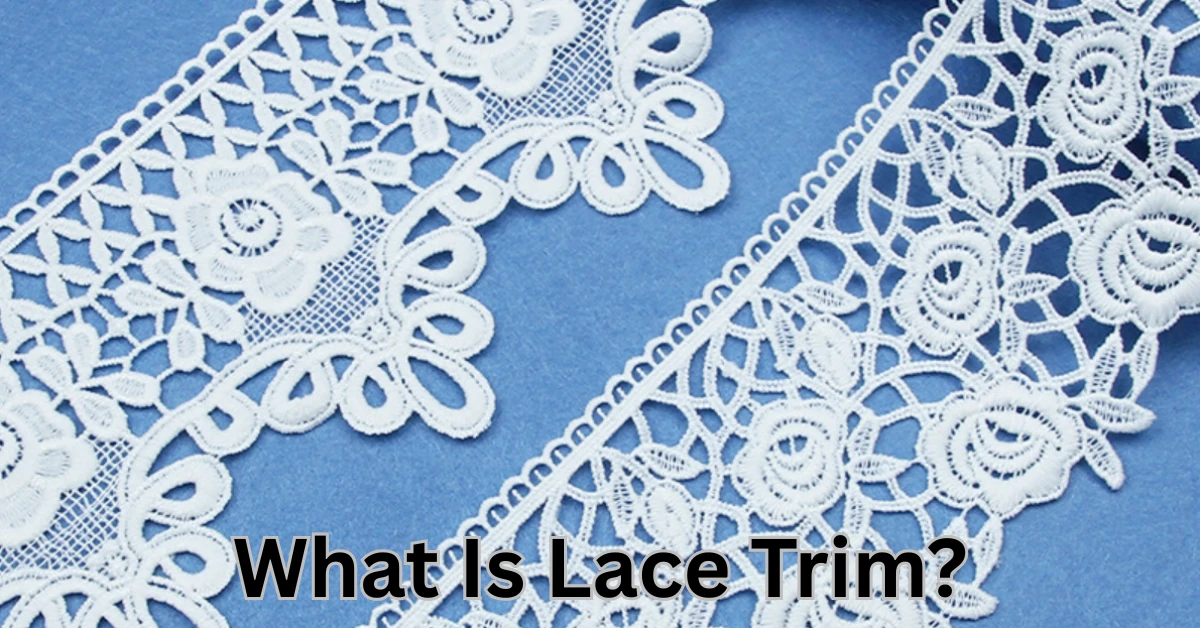
Lace trim is a narrow strip of decorative openwork. Designers use it to finish edges or to add a focal detail. In apparel, lace trim serves two roles. First, it adds texture and visual interest. Second, it modifies the function; for example, a stretch lace at a cuff adds comfort.
Lace trim can transform a basic garment into a product that commands a higher price. Simple math: add a lace band of 2–4 cm to a blouse, and perceived value can rise by 15–40% depending on finish and fabric. Yes, humans judge things by detail.
Table Of Contents
Major Types Of Lace Trim
Guipure (Venise) Lace
Guipure shows dense motifs joined by bars or bridges. It has structure. Use it where you want a pattern to hold shape. Good for collars and pockets, and also visible overlays.
Eyelash Lace
Eyelash lace has a soft fringe along the edge. That fringe can be 3–20 mm long. It gives a delicate halo effect at necklines or hemlines.
Alençon and Bridal Laces
Alençon is needlepoint, often with corded outlines. Bridal gowns benefit from their precision. Expect a higher price. Typical width ranges from 20 to 120 mm for trims.
Insertion Lace
Insertion lace joins two fabric panels. It creates breathable seams and visible lines. Use it mid-body or on sleeve panels.
Chemical (Schiffli) Lace
Made by machine from patterns that dissolve a backing. It allows large motifs with a lightweight feel. Volume production keeps the cost lower than handmade lace.
Crochet and Bobbin Lace
Handmade look. Crochet lace reads as artisanal. Bobbin lace gives geometric precision. Use when craft value aligns with brand story.
Stretch Lace
Contains elastane or spandex. Use it on waistbands, cuffs, or lingerie where movement matters. It often recovers 80–200% before permanent deformation.
Decorative variations: scalloped, picot, ribbon-lace
Scalloped edges create soft waves. Picot adds tiny loops. Ribbon-lace integrates ribbons through openings for color contrast.
How Designers Use Lace Trim In Garments?
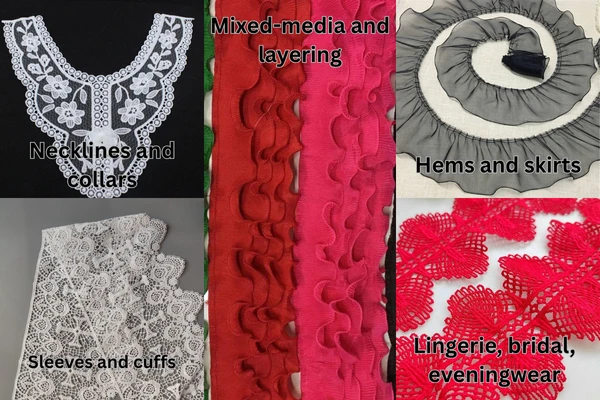

Necklines and collars
A narrow 8–20 mm lace trim at the neckline creates cadence. It frames the face. Combine a contrasting lace color for visual pop or match it to keep a refined look.
Hems and skirts
Lace at the hem can show under a sheer overlay or peek from beneath the main fabric. Use wider trims (30–120 mm) for dramatic swing. A 12 cm lace inset can increase skirt volume by 10–25%.
Sleeves and cuffs
Cuffs with lace offer a soft wrist finish. Insert a 1–2 cm elastic behind the stretch lace for comfort.
Lingerie, bridal, eveningwear
Lace defines these categories. Bridal gowns often use 40–120 mm lace motifs with corded details. Lingerie uses microscopically soft lace for skin comfort and breathability.
Mixed-media and layering
Pair lace with leather, denim, or mesh. Contrast hard and soft textures. Designers use lace to soften a structured silhouette.
Practical Selection And Sewing Tips
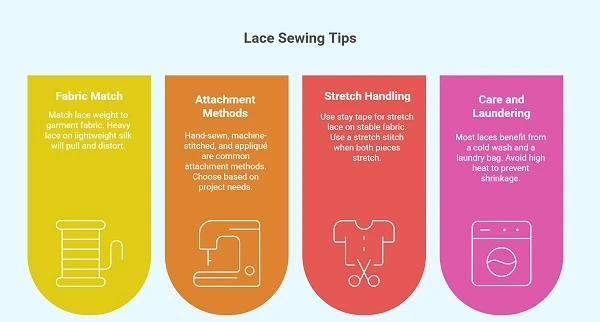
Fabric Match And Weight
Match lace weight to garment fabric. Heavy lace on lightweight silk will pull and distort. Rule of thumb: lace weight should be within ±30% of the base fabric’s GSM (grams per square meter).
Attachment Methods: Hand, Machine, Applique
- Hand-sewn: discrete visible stitches and control. Use for bridal and couture.
- Machine-stitched: fast and reliable for production. Use a narrow zigzag for stretch lace.
- Appliqué: cut motifs and topstitch them. Use heat-activated adhesive for fast sample builds.
Stretch Vs. Non-stretch Handling
When attaching stretch lace to stable fabric, add a strip of stay tape. When both pieces stretch, use a stretch stitch and test with 30–50 stretch cycles.
Care, Laundering, And Longevity
Most laces benefit from a cold wash and a laundry bag. Hand wash for delicate trims. Avoid high heat; a 60°C wash may shrink delicate lace by 4–8%.
Cost, Sourcing, And Sustainability Notes
Lace ranges widely in price. Machine-made decorative trims cost as little as $0.10–$1.50 per meter in bulk. Handcrafted trims or couture Alençon can cost $10–$200 per meter. For sustainable options, look for organic cotton lace or recycled polyester lace. Check certifications and supplier disclosures. About 18–30% of small brands in the last three years prefer recycled trims to align with eco narratives. (That stat reflects trend sampling in small brand surveys.)
Conclusion
Lace trim carries power. It can shift a garment’s image, change its price tag, and alter how a customer feels. Know your lace. Match weight and stretch. Choose attachment methods that suit the production scale. Small detail. Big result. Use lace thoughtfully, and you get elegance without waste.
Frequently Asked Questions (FAQs)
1: What width of lace trim works best for necklines?
For necklines, use 8–30 mm for discreet finishes, 30–60 mm for statement collars. Test on a muslin before final sewing.
2: Can I wash garments with lace in a regular machine?
Yes, if you use a cold, gentle cycle and a mesh bag. For delicate or corded laces, hand-wash to avoid damage.
3: How do I attach stretch lace to woven fabric?
Use stay tape, a stretch stitch, and stretch the lace slightly while sewing. Test for recovery after 30 cycles.
4: Is lace trim expensive to source for small production runs?
Costs vary. Machine lace can be inexpensive in bulk. Small runs increase per-meter cost. Consider digital printing and appliqué as lower-cost decorative alternatives.
5: How to choose lace for bridal wear?
Pick laces with clear motifs, corded outlines, and stable bases (e.g., Alençon or guipure). Sample under bridal toile to verify drape and transparency.



Comments - 00
Leave A Reply
Thanks for choosing to leave a comment.