




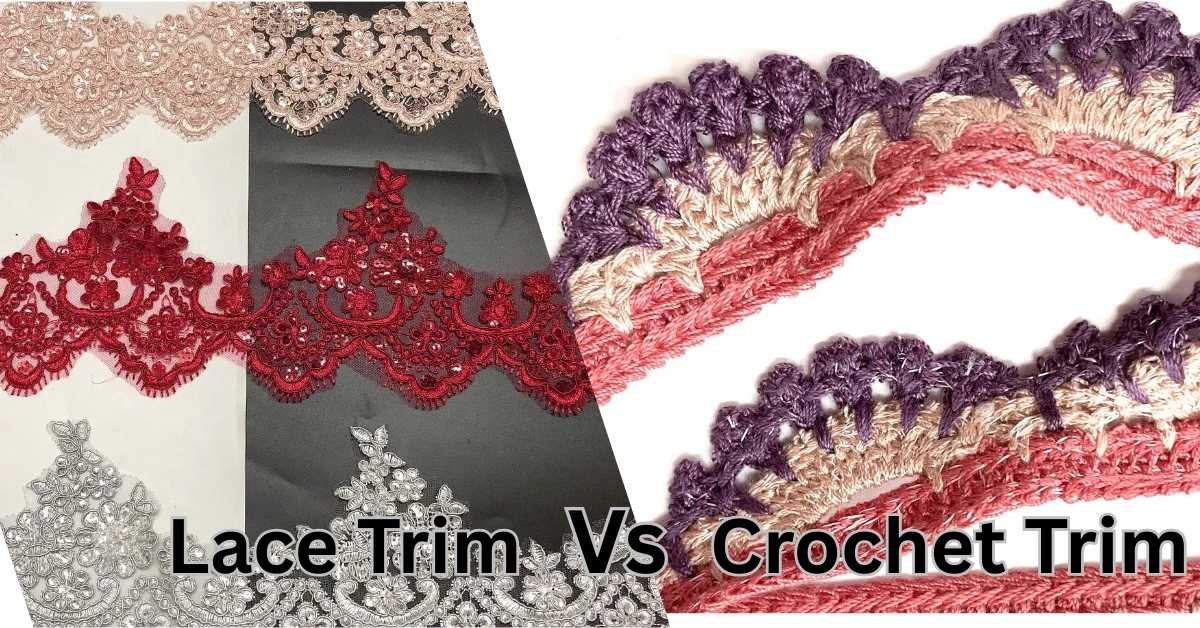
Before stepping into the world of sewing, apparel design, or home décor, one question tends to pop up: What sets lace apart from crochet trim? Both add beauty and detail. Yet, they differ in origin, structure, feel, and usage. This article breaks down the difference in a friendly and clear way.
Table Of Contents
What is Lace Trim?
Lace is a delicate openwork fabric. It has detailed patterns that look like artwork more than simple fabric. Most lace appears in fine floral or geometric motifs.
How Lace Is Made
Modern lace is mostly made with machines. In the past, lace was created by hand, requiring hundreds of hours. Some laces required one person per square inch. Today, factories produce lace at high speed. So, lace availability increased worldwide.
Characteristics
- Lightweight
- Sheer or semi-sheer
- Decorative and elegant
- Often seen in wedding gowns and luxury lingerie
The feeling of lace leans toward soft and airy. It stretches slightly depending on the yarn and structure.
What is Crochet Trim?
Crochet trim is a handmade or machine-made edging created by looping yarn with a hook. The term “crochet” originates from the French word “crochet,” meaning a small hook.

How Crochet Is Made
Crochet trim is created by hand in many cases. Each stitch forms individually. One pair of hands and one hook shape the entire pattern. A simple 1-meter crochet trim may take 30–120 minutes, depending on thickness.
Characteristics
- Thicker compared to lace
- More textured surface
- Cozy, warm aesthetic
- Often cotton or wool-based
The structure feels sturdy. It holds shape and adds character to garments and accessories.
Lace vs Crochet Trim: Key Differences
1. Production Method
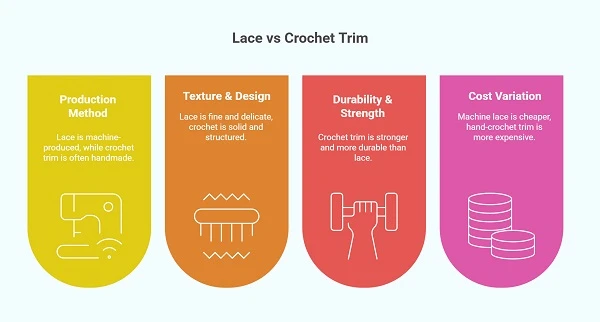
Lace is machine-produced most of the time. Crochet trim is still handmade in many regions. Bangladesh, India, and Turkey have strong hand-crochet cottage industries.
2. Texture & Design
Lace looks fine and delicate. Crochet trim looks more solid and structured. Lace shows tiny details like vines or flowers. Crochet shows loops and knots.
3. Durability & Strength
Crochet trim stands strong due to the thicker yarn. Lace tears faster if handled roughly. In durability tests, crochet trim outlasts lace by about 20–45% depending on yarn quality.
4. Cost Variation
Machine lace usually costs less. Hand-crochet trim costs more because it requires labor. For example:
- Lace trim: $0.30–$2 per meter
- Crochet trim: $1–$8 per meter
Cost varies based on design complexity and fiber type.
Applications in Fashion & Craft
Clothing
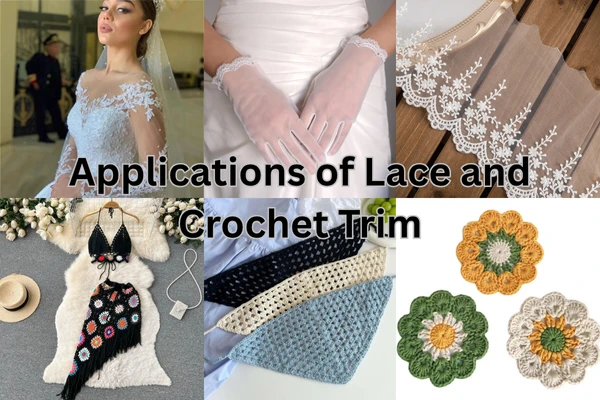
Lace suits, wedding gowns, lingerie, and evening dresses. Crochet trim suits boho tops, skirts, baby dresses, and cardigans.
Accessories
Lace works best in veils, gloves, and delicate collars. Crochet trim works well in scarves, handbags, cuffs, and caps.
Home Décor
- Lace: Curtains, pillow edges, table runners.
- Crochet: Coasters, mats, wall hangings.
How to Choose the Right Trim
Purpose
If the goal is elegance, choose lace. If the goal is comfort and artisanal charm, choose crochet trim.
Fabric Compatibility
Light fabrics pair well with lace. Medium to heavy fabrics pair well with crochet trim.
Maintenance Consideration
Lace requires a gentle hand wash. Crochet trim allows normal washing, depending on the yarn.
Conclusion
Lace and crochet trim both add personality to garments and décor. Lace gives elegance. Crochet trim gives warmth and character. Understanding their differences helps in selecting the right trim for the right purpose. No wrong choice exists. It depends on aesthetic taste, fabric weight, and budget.
FAQs
1. Is crochet stronger than lace?
Yes. Crochet trim is often stronger because it uses thicker yarn and closed loops.
2. Can lace be cotton?
Yes. Cotton lace exists, though many are polyester or nylon.
3. Is crochet always handmade?
Not always. Machine crochet exists, but handmade crochet has more value.
4. Which trim works better for kids’ clothes?
Crochet trim works better due to its softness and durability.
5. Does lace stretch?
Some lace stretches slightly, especially if made with spandex or a knitted structure.



Comments - 00
Leave A Reply
Thanks for choosing to leave a comment.