



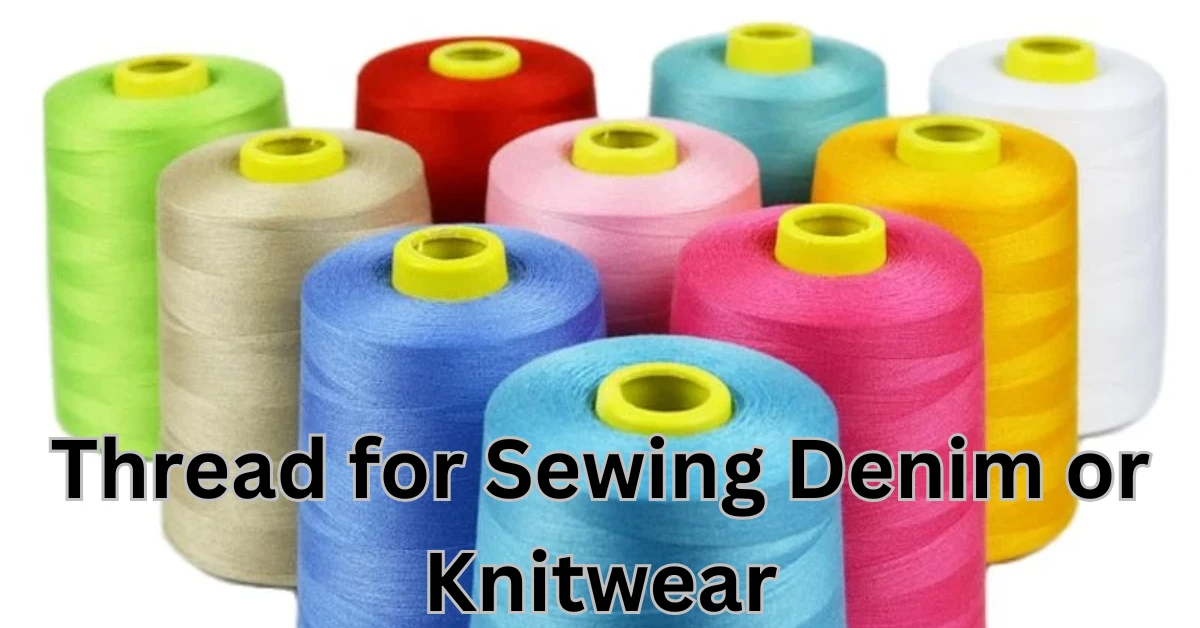
Sewing denim and sewing knitwear ask for two very different personalities in a thread. One wants grit and hold. The other wants stretch and patience. This guide walks you through both short sentences. Clear steps. A bit of humor when fabric fights back.
Table Of Contents
- Quick decision flow: Denim or Knit?
- Key factors to consider
- Thread types explained
- When to pick polyester vs. cotton-wrapped polyester
- When to pick woolly nylon or stretch thread for knitwear
- Needles, stitch type, and machine settings that match the thread
- Practical step-by-step checklist (3 tests to confirm your choice)
- Troubleshooting common problems
- Quick shopping guide and labeling to look for
- Conclusion
- FAQs
Quick decision flow: Denim or Knit?
- If the fabric resists a finger stretch, treat it as denim/heavy woven.
- If the fabric stretches across the grain, treat it as knit/stretch fabric.
- Pick the thread family from that call. Test a scrap. Adjust the needle and stitch. Done.
Key factors to consider
1. Fiber compatibility.
Match the thread fiber to the garment's use. Polyester handles outdoor wear. Cotton looks authentic on denim. Core-spun gives the best of both: cotton face and polyester core.

2. Strength.
Denim needs higher tensile strength. Topstitch needs a thicker thread. Knits need stretch recovery more than brute strength.
3. Elasticity.
Knitwear needs thread with stretch or a stitch that allows stretch. Use woolly nylon in loopers or special stretch thread for needled seams.
4. Finish and abrasion resistance.
Jeans endure abrasion at seams. Choose bonded or polyester-wrapped thread for long life.
Thread types explained
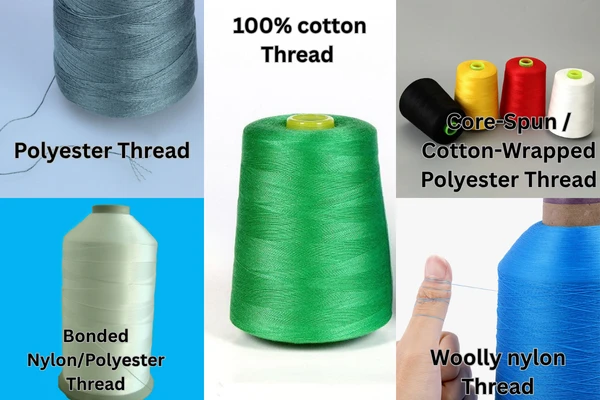
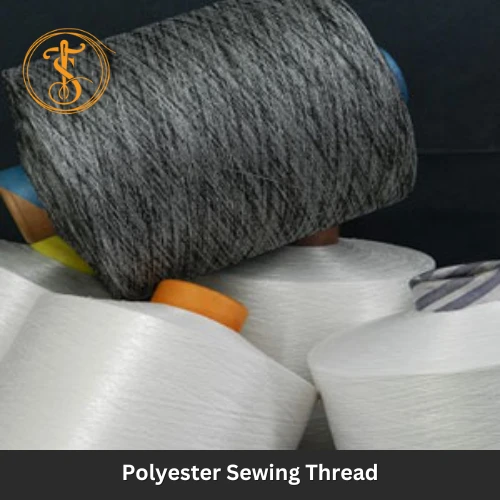
Polyester (all-purpose)
- Good general strength.
- Low stretch.
- Use for lightweight denim seams or when you want consistent behavior.
- Works well in most domestic machines.
Core-spun / Cotton-wrapped polyester
- Cotton outside for a look. Polyester core for strength.
- Best for jeans, topstitch, and visible seams.
- Use when you want a denim look with modern durability.
Bonded nylon/polyester (heavy duty)
- Very strong.
- Use for heavy topstitch or load-bearing seams.
- Slightly slippery; adjust tension.
Woolly nylon (looper/coverstitch)
- Very stretchy.
- Use in the serger looper or for shoulder seams on knits.
- Gives a soft seam finish and good recovery.
100% cotton
- Traditional look at vintage denim.
- Lower strength and may break sooner.
- Choose only for decorative topstitch on light-use garments.
When to pick polyester vs. cotton-wrapped polyester
- Pick core-spun (cotton-wrapped polyester) for visible topstitch on denim. It gives the classic look with modern strength.
- Pick 100% polyester for inner seams on garments that will see water, sweat, or heavy wear. Polyester resists rot and mildew.
When to pick woolly nylon or stretch thread for knitwear
- Woolly nylon for serger loopers and coverstitch machines. It gives soft bulk and high elasticity.
- Stretch thread (polyester/elastomer blends) on the bobbin or needle when you need high recovery, such as activewear waistbands.
- If you sew lightweight knits by home machine, use core-spun polyester in the needle and woolly nylon in the bobbin/looper for the best stretch.
Needles, stitch type, and machine settings that match the thread
Needle sizes and types (short and practical)
- Denim / heavy woven: Needle size 90/14 or 100/16. Use a denim/jeans needle with a sharp point.
- Medium knits: Needle size 80/12 with a ballpoint or stretch needle.
- Fine knits: Needle size 70/10 ballpoint.
- Topstitching: Use a topstitch needle (larger eye) for thicker thread.
Stitch length and type
- Denim seams: Set stitch length 3.0–3.5 mm. Use a straight stitch for seams. Use a longer length for the topstitch to show the stitch.
- Knits: Use 2.0–2.5 mm with a stretch stitch (narrow zigzag or specific stretch stitch) or a serger/coverstitch.
- Topstitching on denim: Use thicker thread and longer stitch length for a visual effect.
Tension tips
- Increase tension slightly for bulky thread.
- Lower upper tension if the thread breaks.
- Run a test stitch on scrap every time. A test solves 80% of problems.
Practical step-by-step checklist (3 tests to confirm your choice)
- Visual test. Sew 10 cm on a scrap. Look for skipped stitches, loops, and uneven stitches. If any, change the needle or tension.
- Stretch test (for knits). Pull the seam gently. If the seam splits, use woolly nylon or a stretch stitch.
- Abrasion/load test (for denim). Rub the seam area or tug it hard. If the thread frays, use a bonded or heavier thread.
If the test fails, change one variable at a time: needle → stitch → tension → thread.
Troubleshooting common problems
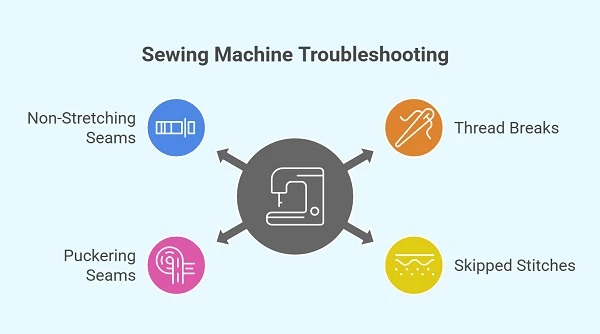
Thread breaks often:
- Wrong needle or too small eye.
- Tension too high.
- Thread not suitable (use bonded/polyester).
Skipped stitches:
- Dull or wrong type needle.
- Needle bent.
- Tension or timing issue.
Puckering on seam:
- Stitch length too short for heavy fabric.
- Needle too large for fabric.
- Feed dogs not handling thick layers — use a walking foot.
Seam not stretching on knit:
- Use non-stretch thread or a wrong stitch.
- Swap to woolly nylon or use stretch stitch.
Quick shopping guide and labeling to look for
- Look for labels: “Jeans”, “Topstitch”, “Heavy Duty”, “Core-spun”.
- For knits, look for “Stretch”, “Elastic”, “Woolly Nylon”, “Serger”.
- Buy a small spool first. Test before you commit.
Labels and numbers explained (short)
- Wt (weight): Lower wt usually means thicker thread in some systems. But thread weight systems vary by brand.
- Tex: A metric showing grams per 1,000 m. Higher Tex = thicker.
- Denier: Rare for sewing thread; more for filament yarn.
If you see “Core-spun 30 wt” or “Topstitch 40”, take it as heavier than a standard all-purpose 50–60 wt.
Conclusion
Pick a thread like you pick tools. Match the job. For denim, favor strength and abrasion resistance: core-spun or bonded polyester. For knits, favor elasticity: woolly nylon or stretch threads with a proper ballpoint needle. Always test on a scrap. Use the right needle. Adjust tension and stitch length. Do that and you will sew fewer seams twice. Plus, your jeans will outlive your regrets.
FAQs
1: Can I use regular all-purpose polyester thread for denim?
Yes, for light denim or inner seams. For topstitch and heavy wear, choose core-spun or heavy-duty thread.
2: What thread should I use on a serger for knits?
Use woolly nylon in the looper and core-spun or polyester in the needle. That gives stretch and a soft seam.
3: Which needle for jeans topstitching?
Use a topstitch needle or a 90/14–100/16 jeans needle. A bigger eye helps the thread pass without shredding.
4: My knit seams pop when stretched. Why?
Likely wrong thread or stitch. Use woolly nylon or a stretch stitch. Also, use a ballpoint needle and check tension.
5: Do thread color and finish matter for denim?
Yes. Cotton-wrapped thread gives a classic matte look. Polyester shines more. Choose a color to match or contrast. Topstitch usually uses a thicker, contrasting thread for style.

Comments - 00
Leave A Reply
Thanks for choosing to leave a comment.