




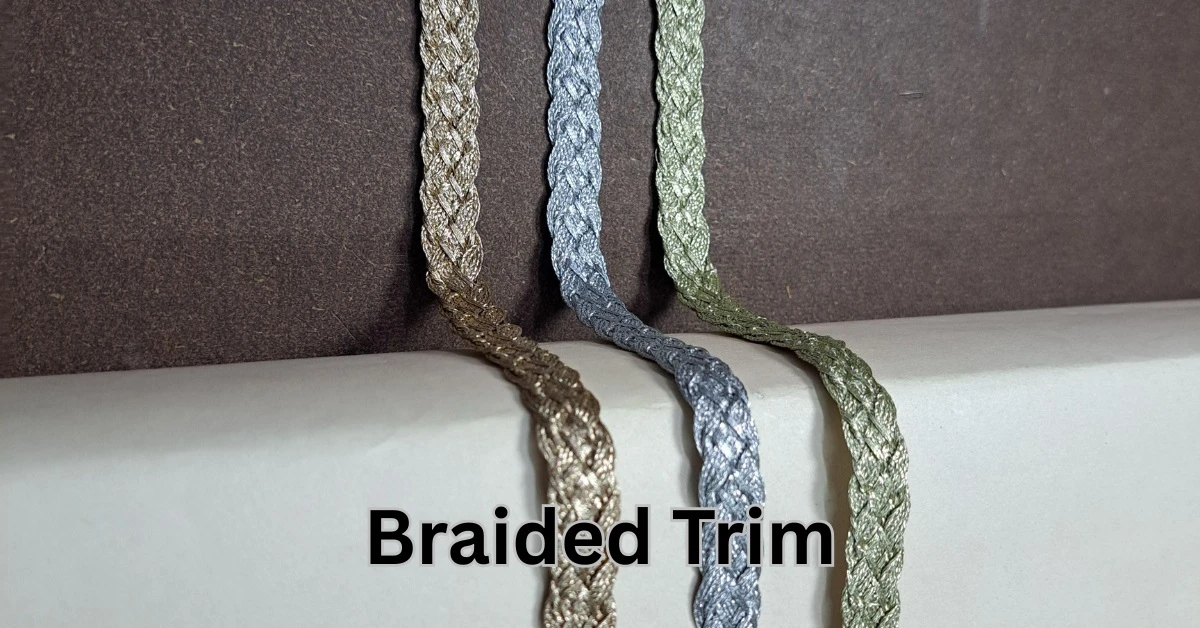
What Is Braided Trim?
Braided trim is a decorative, narrow fabric made by interlacing two or more yarns or cords. Designers use it to finish edges, hide seams, add texture, or create bold accents. The item appears in garments, furniture, bags, and stage costumes. Think of braided trim as a small hero. It hides flaws and draws eyes.
Table Of Contents
Core Types Of Braided Trim
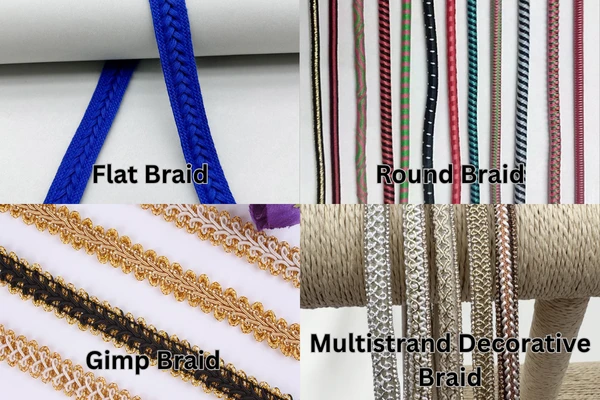
Flat braid (tape braid)
Flat braid lies flat on a surface. Typical width: 3 mm to 50 mm. Use it as edge binding, curtain tape, or garment band. Common fibers: cotton, polyester, rayon.
Round braid (cord, soutache)
A round braid resembles a thin rope. Diameter range: 1 mm to 12 mm. Use it for piping, drawcord, or ornamental loops. Soutache is a type of flat, narrow braid with a raised profile. It suits braiding around buttons or trims on jackets.
Gimp and gimp braid
Gimp braid shows a raised center with decorative stitch rows. Makers use gimp for upholstery edges, lampshade rims, and trim around cushions. Expect a profile height of 1–6 mm.
Multistrand Decorative Braid
This type combines several colors and textures. It can include metallic yarn, leather strip, or synthetic cord. Manufacturers make complex patterns with 4 to 24 strands. Use this when you want a statement trim.
Materials and finishes
- Natural fibers: cotton, linen, wool.
- Synthetic fibers: polyester, nylon, rayon.
- Specialty: leather, metallic yarn, PVC-coated cord.
- Finishes: matte, gloss, metallic, flame-retardant.
Pick material by function. For water exposure, pick synthetic. For luxury garments, pick silk or a rayon blend.
Sizes, Measurements, And Specs
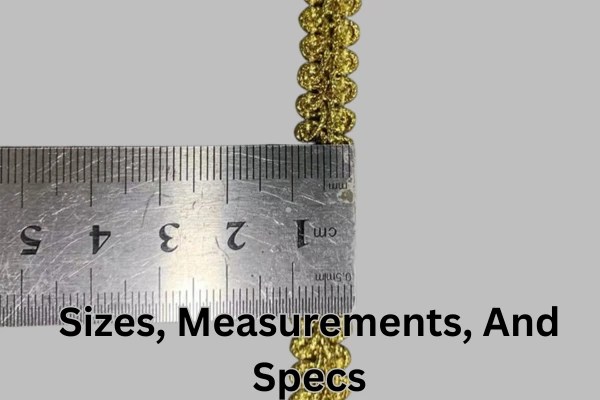
Typical widths and cord diameters
- Flat braid: 3 mm, 6 mm, 12 mm, 25 mm, 50 mm.
- Round cord: 1 mm, 2 mm, 4 mm, 8 mm, 12 mm.
- Piping braid: cord plus cover; total width often 6–12 mm.
Strength and abrasion notes
- Polyester shows 20–40% higher abrasion resistance than cotton in lab tests of similar structure.
- Leather braid holds shape, but gains wear marks faster.
- For upholstery, choose trim with an abrasion rating above 30,000 double rubs for high traffic.
Top 12 Applications By Industry
1. Garment edge finish
Use braid on hems, jacket fronts, and collars. Designers often add 2–3 mm braid for a refined look.
2. Piping and seam accent
A round braid with a cover forms piping. Piping adds a visual line and structure.
3. Trims on formal wear
Soutache and decorative braid appear on gowns and military uniforms. They create contrast and authority.
4. Upholstery edging
Gimp and braid hide welt gaps and cushion seams. Manufacturers use 10–30 m per sofa set on average.
5. Curtain and drapery
Flat braid serves as a header tape or a decorative band. A 2.5 m curtain often needs 0.5–1 m of braid per side.
6. Bag handles and straps
Round braided cord reinforces handles. Leather braid adds luxury. Use 3–6 mm cord for small bags and 8–12 mm for backpacks.
7. Footwear trim
Decorative braid finds a place on sandals and boots. Use abrasion-resistant material in high-wear zones.
8. Costumes and theater
Bold braid functions as an eye-catching detail. Costume shops order 20–50 m per production.
9. Military and ceremonial gear
Gold or metallic braid signals rank. Use specific patterns for branch and rank code.
10. Home craft and DIY
Crafters use braid for scrap projects, lampshade rims, and picture frames.
11. Automotive interiors
Braided trim covers seams and adds a custom look. Choose heat and UV-resistant materials.
12. Technical and safety uses
Reflective braid adds visibility. Use in apparel for cyclists and roadside workers.
How To Choose The Right Braided Trim?
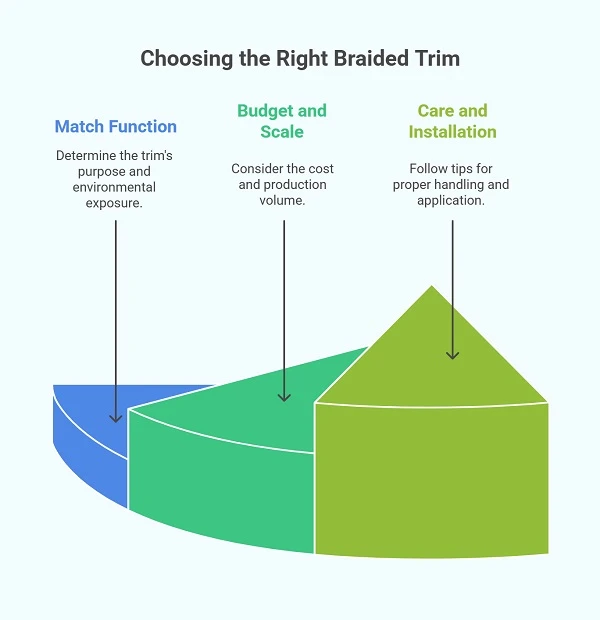
Match function with form
Ask three quick questions: Will it face abrasion? Will it face moisture? Will it need flame resistance? Pick the material and finish by answering.
Budget and production scale
Small runs accept hand-applied trims. Large runs require machine-applicable braid or pre-formed piping. Cost per meter ranges widely: plain polyester braid may cost $0.10–$0.50 per meter; leather or metallic braid may cost $2–$10 per meter.
Care and installation tips
- Test a 10 cm sample before bulk order.
- Sew with a needle two sizes larger when the braid contains metallic yarn.
- For glued applications, use a contact adhesive rated for textiles.
- For heat-sensitive fibres, avoid high-temperature ironing; press through a cloth at low heat.
- Store braid on rolls. Keep humidity under 60% and temperature under 25°C.
Conclusion
Braided trim offers a small footprint and large impact. Designers get texture, line, and function in one item. Match the braid type to the use case. Pick fiber by wear, moisture, and budget. Measure twice, order a sample, and test once. Done right, a 5 mm braid can turn a plain piece into something memorable. I speak from mild obsession and a few ruined prototypes. You will love the change it brings.
FAQs
1: What is the best braid for heavy upholstery?
Choose a gimp braid or heavy round cord in polyester or blended yarn. Seek an abrasion rating above 30,000 double rubs.
2: How much braided trim do I need for a sofa?
A typical sofa needs 10–30 meters. A loveseat uses 6–12 meters. Measure edges before you buy.
3: Can I wash braided trim?
Yes, if the fiber supports washing. Polyester braid tolerates machine wash. Leather braid needs spot cleaning or leather care.
4: How to attach a braid to a garment edge?
Stitch with a straight stitch close to the braid edge. For piping, encase the cord and stitch in the seam. Test stitch tension on a sample.
5: Does metallic braid cause skin irritation?
Some metallic yarns can irritate sensitive skin. Use a fabric backing or choose non-metallic alternatives for garments worn close to the skin.

.webp)


Comments - 00
Leave A Reply
Thanks for choosing to leave a comment.