




Table Of Contents
What Is an Elastic Cord Lock?
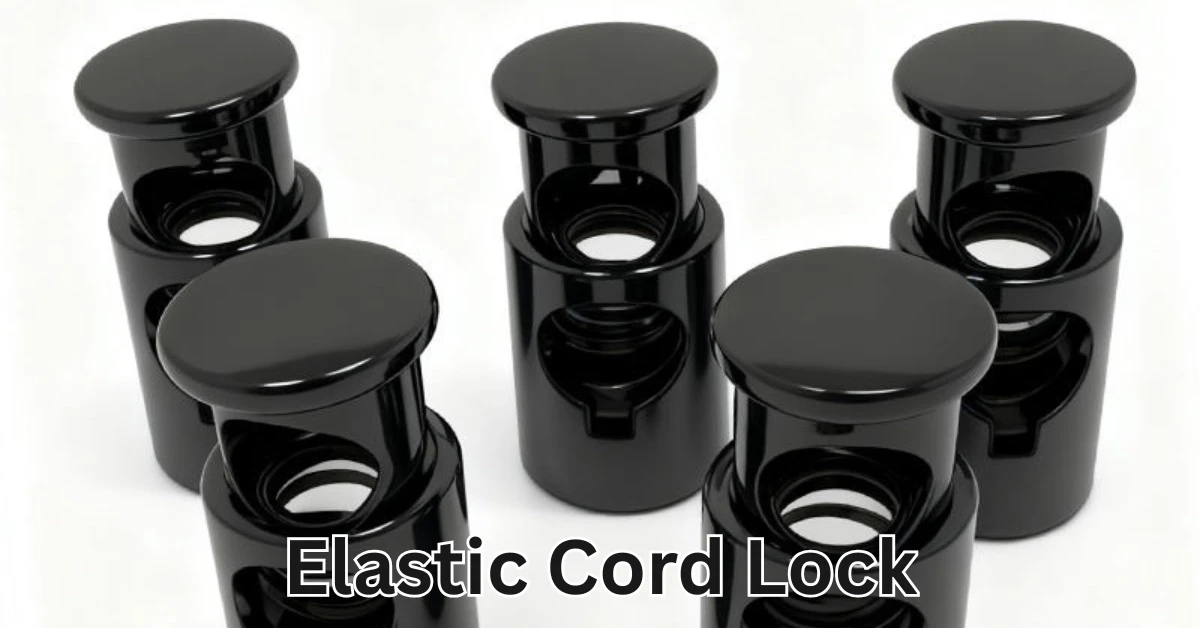
An elastic cord lock is a small device that secures a cord or drawstring without the need for knots. Many brands call it a toggle, stopper, spring lock, or cord fastener. Outdoor and sportswear rely on this tiny part for fast adjustment, a tighter fit, and safer gear. It saves time, cuts weight, and creates a cleaner finish.
Types of Cord Locks
Spring Cord Lock (Toggle)
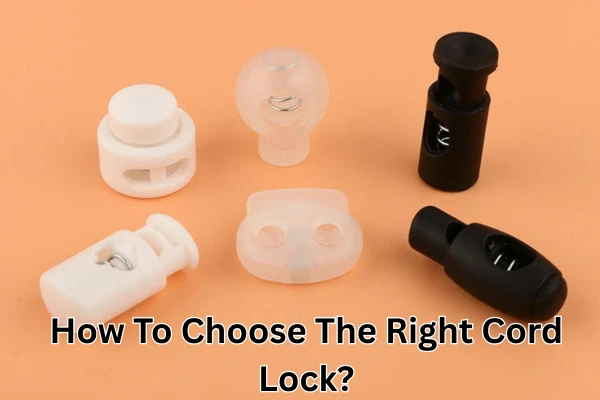
This is the most used category. It works with a spring and a push button. Press, adjust, release. The cord stays fixed. Outdoor jackets and hiking gear use this model the most.
Barrel Cord Lock (One-Piece)
A single molded body holds the cord using friction rather than a metal spring. It costs less and suits lightweight apparel and accessories.
Mini and Low-Profile Cord Locks
These reduce bulk. Sportswear brands use them on running vests, shoes, and kids’ garments.
Core Parts: Housing, Spring, Bore, Button
Every cord lock includes a body, a bore (the hole), and a button. If it’s spring-loaded, a tiny steel spring sits inside the housing.
Why Designers Choose Cord Locks in Outdoor and Sportswear?
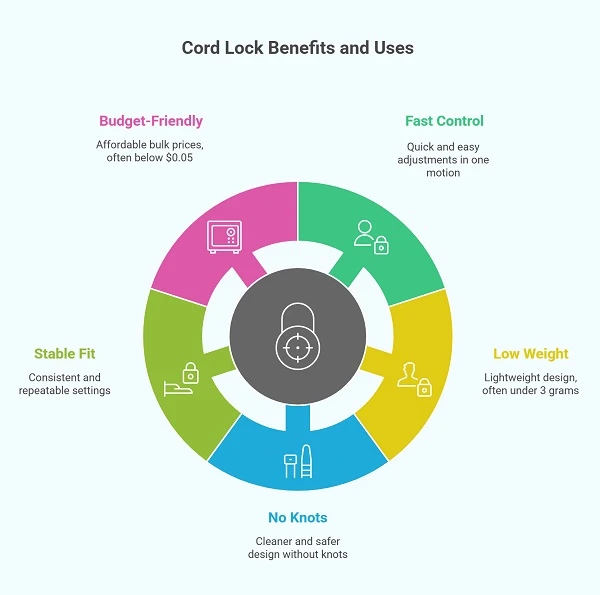
Five Practical Benefits
|
Benefit |
Explanation |
|
Fast control |
Allows quick adjustment in one simple motion |
|
Low weight |
Typically weighs less than 3 grams per piece |
|
No knots |
Provides a cleaner and safer garment finish |
|
Stable fit |
Maintains the same adjustment position every time |
|
Budget-friendly |
Bulk cost often stays below $0.05 per unit |
Common Use Cases
Jackets and Hoods
They help tighten hems and hood openings, especially in wind or rain.
Backpacks and Packs
Used for compression cords, lid closures, and side pockets.
Tents, Sleeping Bags, Footwear, Pants
Tents use them on guy lines. Sleeping bags rely on a neck baffle. Trail shoes use them in quick-lace systems. Pants use them at the hems or waist.
Materials and Finishes
Plastic, Metal, Silicone, and Nylon Cord Locks
- Plastic (Acetal or PA6) — 80–90% of global cord locks.
- Metal — Premium and durable.
- Silicone-coated — Better grip and soft touch.
- Nylon Fiber Core — High-temperature and heavy-load applications.
UV, Salt, and Cold Weather Notes
UV damage hits plastic after long exposure. Salt corrodes poor-grade springs. Cold temperatures weaken low-quality springs. Designers use UV-stabilized plastic and stainless steel springs for harsh climates.
How To Choose The Right Cord Lock?
Size and Hole Diameter
Match bore size with cord diameter. For example, 2–6 mm is typical for outdoor gear.
Spring Strength and User Force
A hood may need a 10–20 N hold force. Backpacks may need 40–60 N. High-load items use stronger springs.
Weight, Cost, and Aesthetics
Metal adds weight and cost. Plastic stays light and cheap. Aesthetic decisions depend on brand style.
How to Fit and Maintain a Cord Lock?
Step-by-Step Fit
- Thread the cord through the bore.
- Press the button.
- Move the lock to the desired point.
- Release.
- Heat-seal cord ends to avoid fraying.
Quick Fixes for Common Problems
- Slip — Cord is too thin.
- Cracks — Low-quality plastic.
- Spring fail — Replace after 10,000 cycles or more.
Design Tips for Product Developers
Test Checklist (3 Lab Tests + 5 Field Checks)
Lab tests:
- 10,000-cycle button test
- 48–96 hr salt spray test
- 200–500 hr UV exposure test
Field checks:
- −20°C cold test
- 40°C hot test
- Heavy load test
- User fit trial
- Wash endurance test (20 cycles)
Sustainability and Supplier Notes
Ask for recycled plastics. Verify RoHS and REACH compliance. Check lead times—common parts take 6–12 weeks from overseas suppliers.
Conclusion
An elastic cord lock seems small, yet it carries huge functional value. It boosts fit, improves speed, removes knots, and keeps gear stable in tough conditions. Outdoor and sportswear brands depend on this simple component to deliver precision and comfort. Choose the right material, test it well, and the final product feels better and lasts longer.
FAQs
1. Is a cord lock better than tying a knot?
Yes. It saves time and offers consistent tension.
2. Do cord locks rust?
Plastic ones don’t. Metal ones do unless stainless steel is used.
3. Can I use any cord with any cord lock?
No. Match the bore size with the cord diameter.
4. Why do some cord locks slip?
Usually, because the cord is too thin or the spring is weak.
5. How long does a good cord lock last?
Quality ones last more than 10,000–15,000 cycles.


Comments - 00
Leave A Reply
Thanks for choosing to leave a comment.