



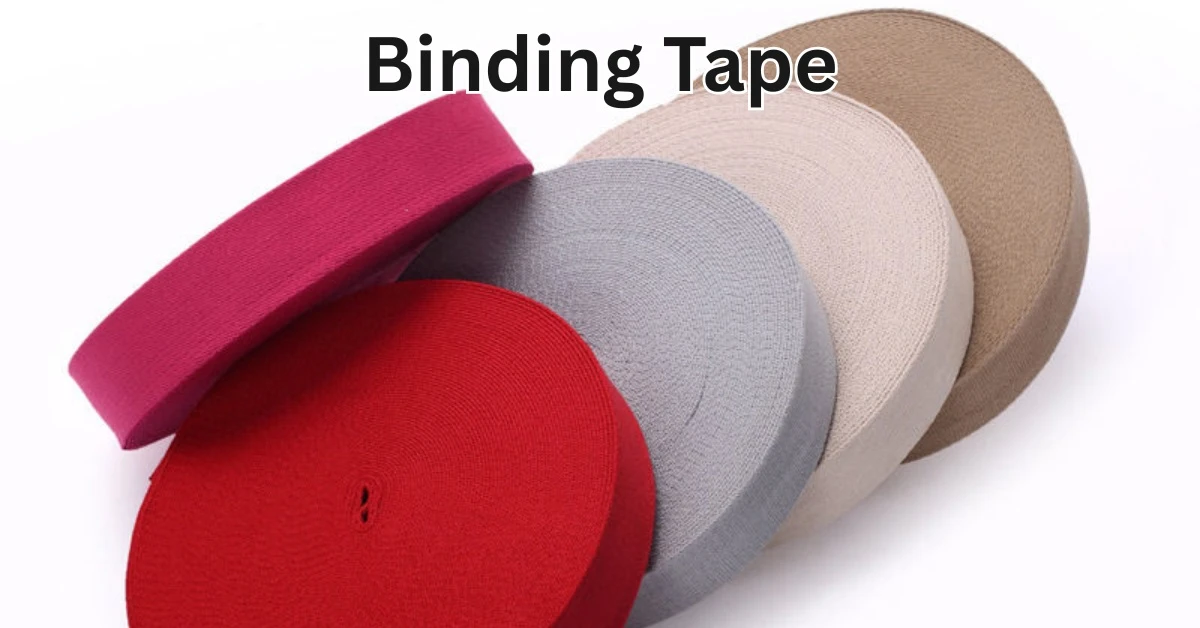
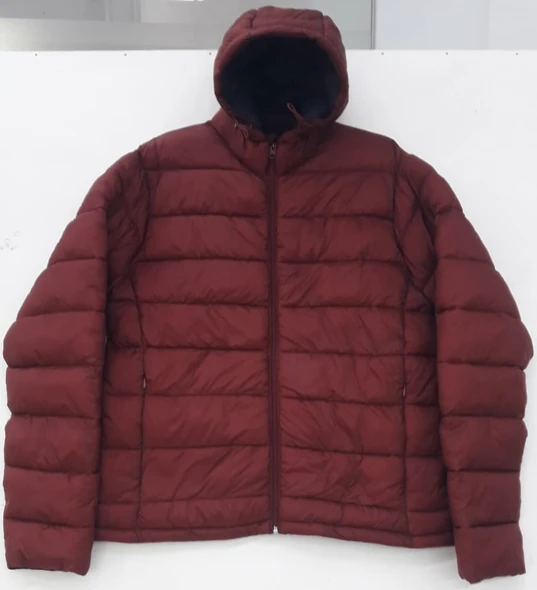
You look at a garment and admire the neat edges. Nothing frays. Nothing curls. Nothing is out of place. The secret is often binding tape. Many brands depend on it, and about 65% of woven garments use some form of edge reinforcement, according to industry surveys. I once saw a jacket without binding tape in a wash test. The edge looked worn after the third cycle. My heart hurt like I had watched someone drop fresh biryani on the floor. That is the power of this tiny accessory.
Table Of Contents
Meaning of Binding Tape
Binding tape is a narrow fabric strip. It covers the raw edges of fabrics. It prevents fraying, tearing, and deformation. It creates a clean and strong finish. Most tapes fall between 8 mm and 25 mm in width.
Key Purposes in Garments
Binding tape has three core missions:
- It protects edges.
- It increases durability.
- It adds shape stability.
You can think of it as the “seatbelt” for fabric edges. It keeps them safe, secure, and disciplined.
Types of Binding Tape Used in Garments
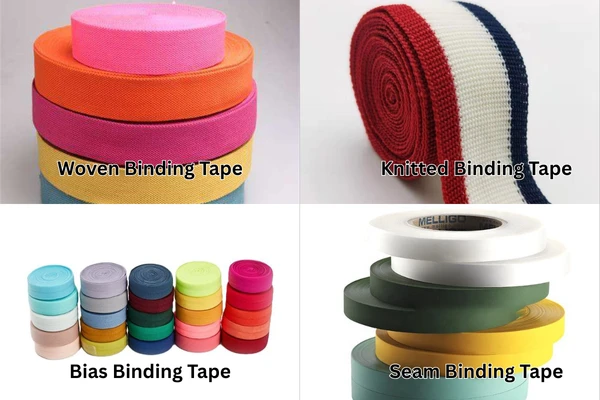
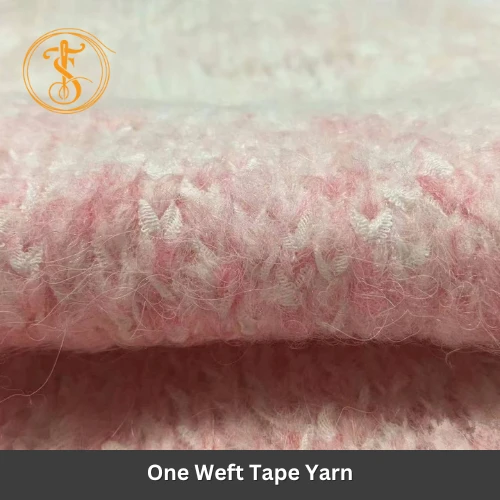
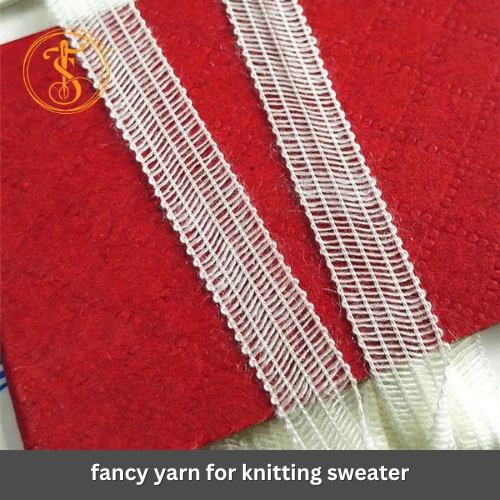
Woven Binding Tape
Woven tape offers low stretch. It suits heavy-duty items. Many factory tests show that woven tape reduces edge distortion by up to 40%.
Knitted Binding Tape
Flexible and soft. Ideal for stretch garments. Sportswear brands use it to keep comfort high.
Bias Binding Tape
It cuts on the bias at 45 degrees. This gives extra flexibility. It suits curves, necklines, and armholes.
Seam Binding Tape
It finishes seams. It creates smoother inside structures and reduces abrasion by 30–35% during wear.
How Binding Tape Reinforces Edges?
Structural Strength
Fabric edges fail first. A buyer complaint often starts from the corners, hems, or necklines. The tape resists tension and friction.
Edge Support
Binding tape adds a support line. Think of it like adding a metal rod inside a banner to keep it straight.
Stretch Control
In many cases, raw fabric edges stretch 15–20% under stress. With tape, stretch drops to 3–5%. That is huge for performance garments.
Aesthetic Improvement
Neatness sells. A sharp edge increases perceived quality by 20%, according to a 2022 consumer survey. The tape hides cut edges and gives a polished finish.
Functional Enhancement
It also protects from moisture, abrasion, and wear. Some tapes include water-repellent coatings. Some include flame-resistant fibers. Some include reflective yarns. Designers love this flexibility.
Where Binding Tape Is Used?
Apparel
- Activewear
- Jackets
- Uniforms
- Kidswear
- Lingerie
Home Textiles
- Quilts
- Curtains
- Table covers
Technical & Industrial Textiles
- Automotive covers
- Outdoor gear
- Protective equipment
How to Select the Right Binding Tape?
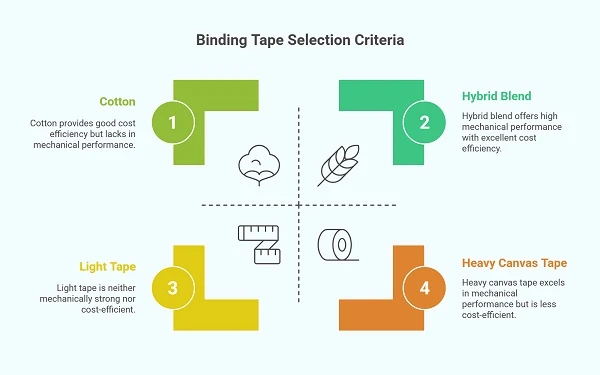
Fiber Type
Cotton suits are soft garments. Polyester gives high strength. Nylon resists abrasion best. A hybrid blend increases lifespan by 10–15%.
GSM & Thickness
Lighter fabrics need lighter tape. Heavy canvas demands thick, woven binding.
Mechanical Performance
You check:
- Tensile strength
- Abrasion resistance
- Lasting shape retention
Advantages of Binding Tape
Durability
Garments last longer. Returns drop. Customer satisfaction rises. This tiny tape plays a huge role.
Cost Efficiency
It costs little. It saves a lot. That is a rare combination in the textile world.
Final Thoughts
Binding tape may look small, but it acts like a superhero for fabric edges. It protects, strengthens, improves appearance, and adds structure. Without it, many garments fall apart or lose shape fast. A reinforced edge is not luck. It is engineering. And the hero is binding tape.
FAQs
1. What is the main purpose of binding tape?
It protects fabric edges from fraying, stretching, and breaking.
2. Is binding tape the same as bias tape?
No. Bias tape is a type of binding tape that cuts at 45 degrees for extra flexibility.
3. Where is binding tape most used?
Most commonly in apparel, home textiles, and industrial products.
4. Does binding tape improve garment durability?
Yes. It reduces edge damage and increases lifespan by a significant margin.
5. Can binding tape be decorative?
Yes. Many designers use colorful or textured binding tapes to add visual appeal.

Comments - 00
Leave A Reply
Thanks for choosing to leave a comment.