


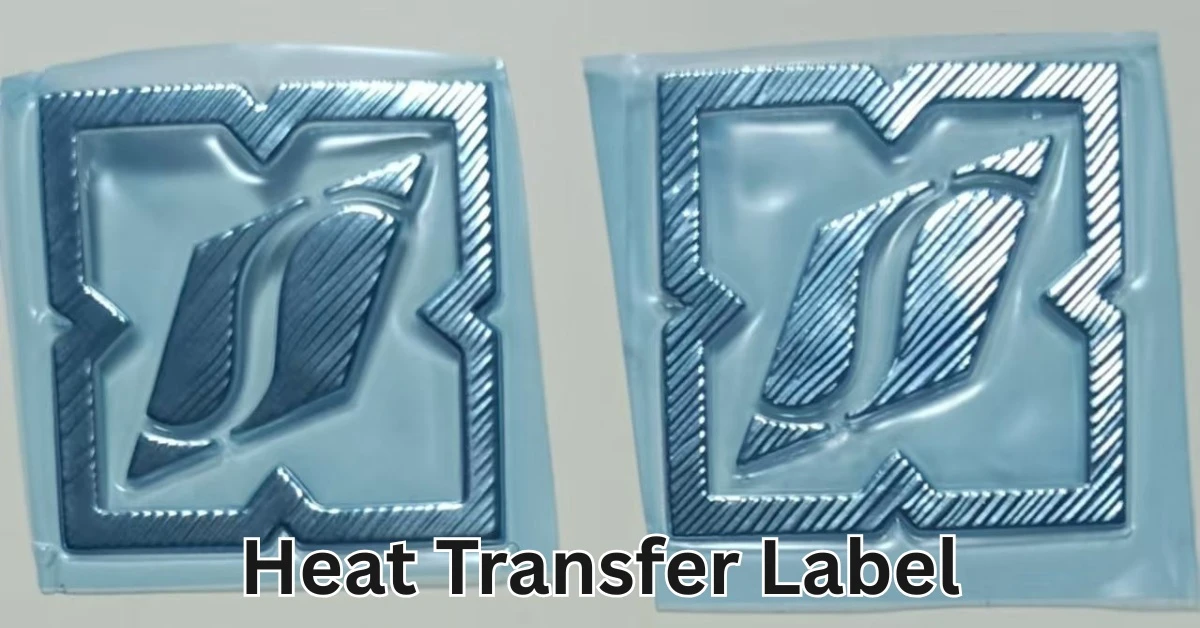
A heat transfer label sits inside most garments you wear, yet you hardly feel it. That is the whole point. Around 73% of major apparel brands shift toward heat transfer labels to remove itchy tags. Let’s break the concept with clarity and simplicity.
Table Of Contents
What Is a Heat Transfer Label?
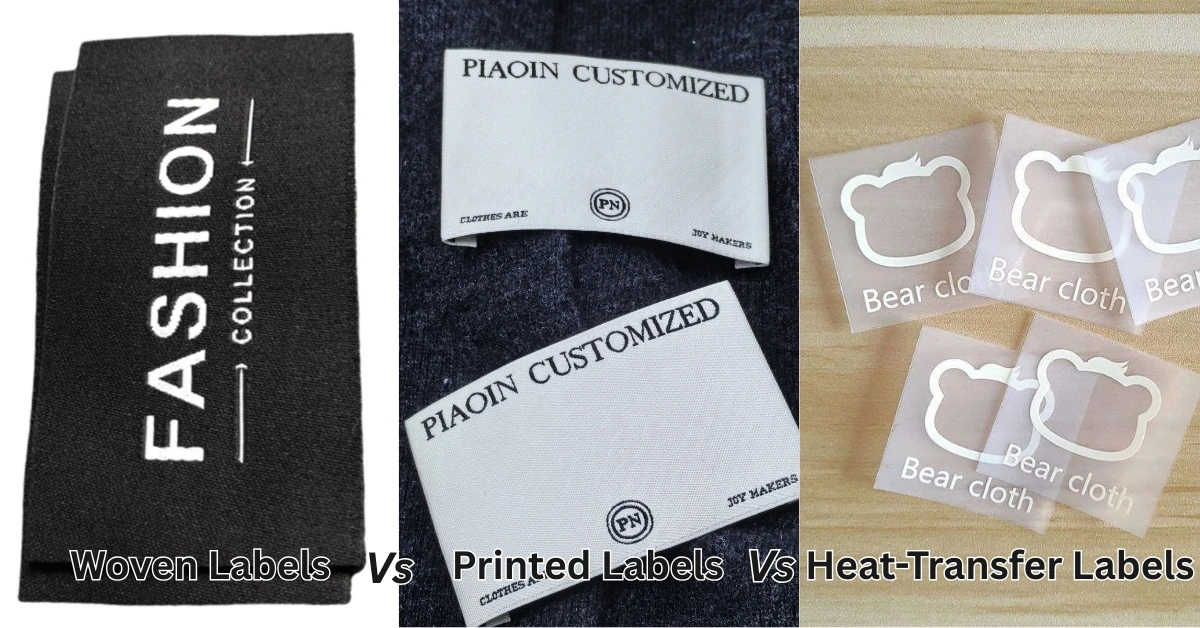
A heat transfer label is a printed label that bonds directly to fabric under heat and pressure. It works like a “fabric tattoo” that carries branding, care details, and size info without a physical tag.
How Heat Transfer Labels Work?
A heat transfer label forms through three elements:
- Carrier film
- Adhesive
- Heat-activated ink
A heat press uses 140°C–180°C and pressure for 8–15 seconds. Ink and adhesive fuse into the fabric surface.
Main Characteristics
- Soft feel
- No irritation
- High clarity
- Durable for 50–80 washes
- Ideal for sportswear, kidswear, seamless apparel, and swimwear
Types of Heat Transfer Labels
Plastisol Heat Transfer
Bold colors. Strong adhesion.
Silicone Heat Transfer
High stretch. Perfect for performance wear.
Digital Heat Transfer
Sharp graphics with micro-details.
Reflective Heat Transfer
Used in safety gear for visibility.
What Is a Woven Label?
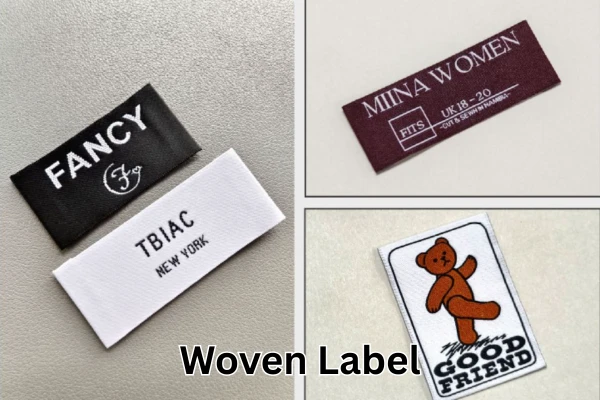
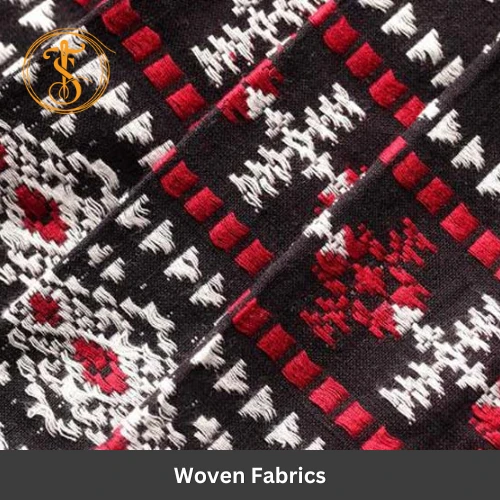

A woven label is made on a loom using polyester, cotton, or nylon yarns. It has a textured, stitched look and remains a classic choice for branding.
Characteristics of Woven Labels
- Woven with yarn
- High durability (100–150 wash cycles)
- Strong color retention
- Premium look and feel
Types of Woven Labels
-
Damask Woven Label
Fine weave. Soft. Premium.
-
Satin Woven Label
Shiny. Smooth surface.
-
Taffeta Woven Label
Economical. Slightly coarse.
Difference Between Heat Transfer Label and Woven Label
|
Feature |
Heat Transfer Label |
Woven Label |
|
Material Composition |
Ink, film, TPU, adhesive |
Polyester or cotton yarn |
|
Feel on the Skin |
Very soft, zero irritation |
Light texture, may feel rough to some |
|
Durability |
Lasts 50–80 wash cycles |
Lasts 100–150 wash cycles |
|
Application Method |
Applied using heat and pressure |
Sewn-in or applied with heat-seal backing |
|
Cost per Label |
$0.03–$0.06 per piece |
$0.05–$0.12 per piece |
|
Branding Style |
Minimal, modern, invisible look |
Classic, tactile, premium look |
|
Visual Appearance |
Smooth printed finish |
Textured, stitched appearance |
How to Choose the Right Label?
Consider the Garment Type
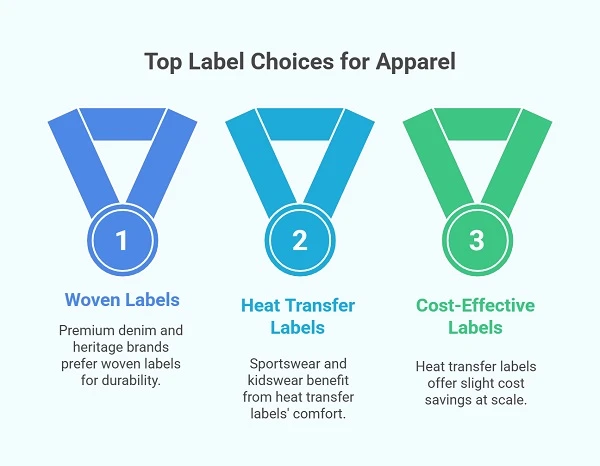
Sportswear, kidswear, and seamless apparel perform better with heat transfer labels.
Consider Brand Personality
Premium denim, jackets, and heritage brands prefer woven labels.
Consider Comfort
Heat transfer feels softer and is ideal for sensitive skin.
Consider Durability
Woven labels win long-term durability tests.
Consider Cost
Heat transfer labels cost slightly less at scale.
Advantages of Heat Transfer Labels
- Softest option
- Ultra-light
- Ideal for stretch fabrics
- Tagless comfort
- Sharp printing
Advantages of Woven Labels
- Most durable
- Luxurious look
- Works on all garments
- Strong brand visibility
Conclusion
Heat transfer labels offer invisible comfort and modern style, while woven labels provide durability and premium identity. Each one excels in a different purpose. If comfort and minimalism matter, heat transfer stands out. If long-lasting branding and rich texture matter, woven labels win. The choice depends on your product category, fabric type, and brand message.
FAQs
1. Do heat transfer labels peel off?
Not when applied with correct temperature and pressure. High-quality options last up to 80 washes.
2. Are woven labels suitable for baby clothes?
Woven labels may feel slightly textured, so many brands prefer heat transfer for babies.
3. Can heat transfer labels work on nylon?
Yes, with proper adhesive.
4. Which lasts longer?
Woven labels last longer by a wide margin.
5. Can a garment use both?
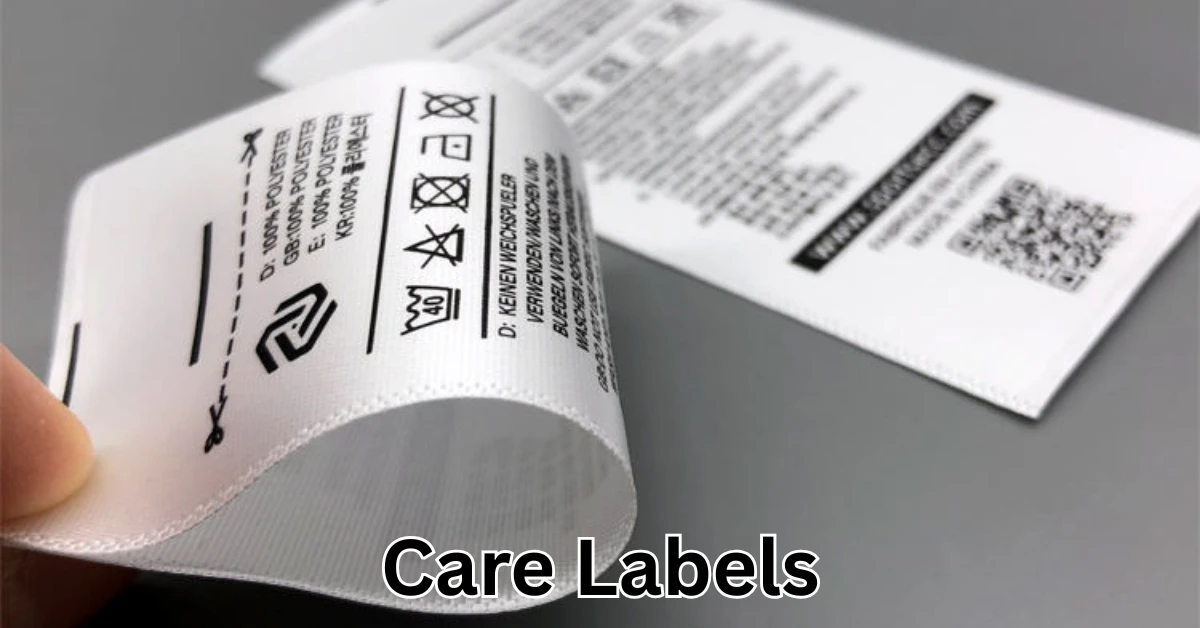
Yes. Many brands use woven labels for branding and heat transfer for care info.

Comments - 00
Leave A Reply
Thanks for choosing to leave a comment.