




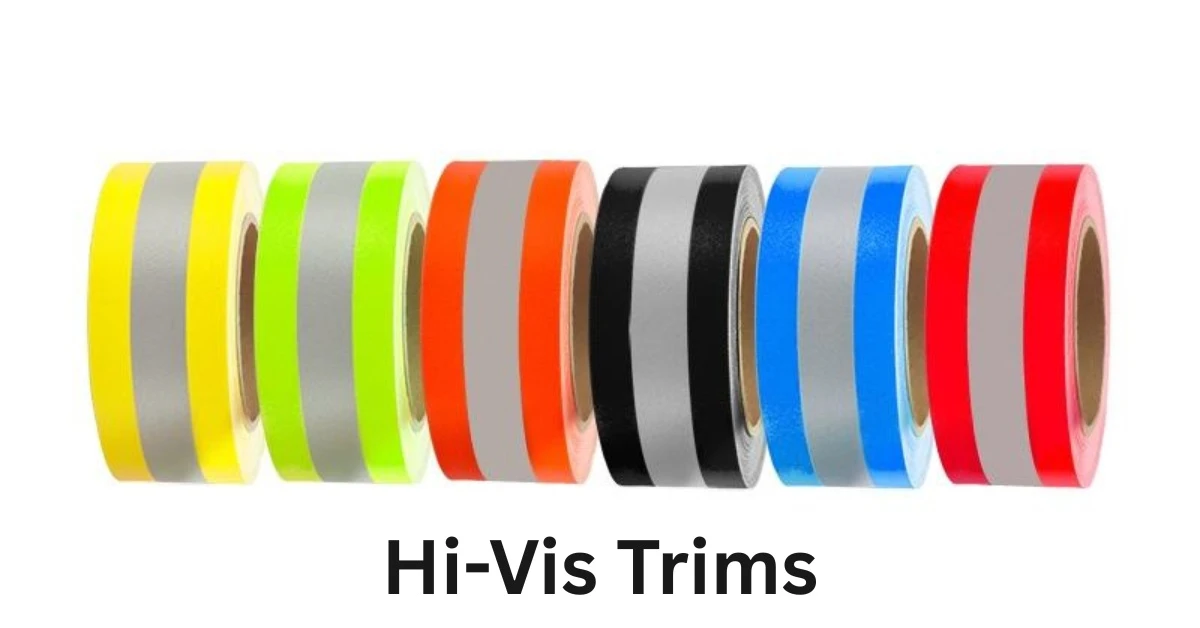
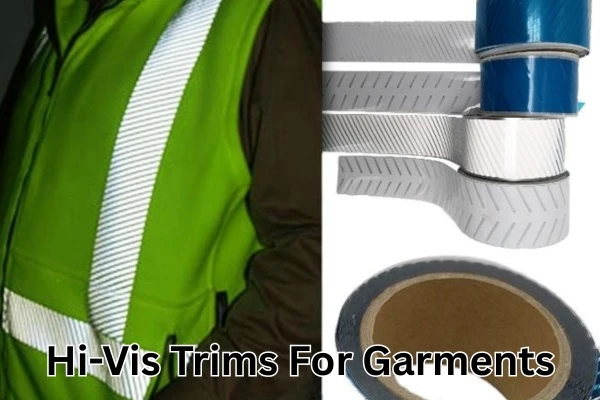
Hi-vis trims are the reflective and fluorescent elements added to safety garments. These include reflective tape, retroreflective trim, fluorescent fabric panels, and combined-performance materials. Think of them as the “highlight markers” of clothing. Small parts, yes, but powerful enough to cut accident risk by helping drivers spot a worker from far away.
Most workers in construction, road maintenance, warehouse logistics, emergency response and rail operations rely on these trims daily. A tiny strip of reflective tape can be the difference between a near miss and a collision.
Table Of Contents
Why Hi-Vis Trims Matter for Safety
Visibility affects reaction time. A driver often gets less than 1.5 seconds to judge and react when a person appears in low light. Reflective trims create motion cues, bright contrast, and shape identification.
Numbers speak louder than opinions:
- Fluorescent colours increase daytime visibility by up to 60%.
- Retroreflective tape improves night recognition distance by more than 300% compared to non-reflective clothing.
- Workers with full 360° reflectivity experience fewer close-call incidents.
Hi-vis trims don’t just shine; they protect. And they do it silently.
Global Standards for Hi-Vis Trims
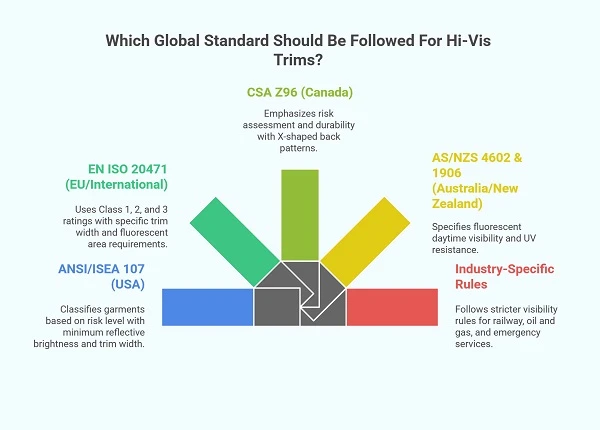
ANSI/ISEA 107 (USA)
ANSI/ISEA 107 classifies garments into Class 1, Class 2, Class 3, and E-type based on risk level. The standard defines minimum reflective brightness, trim width, garment zones, and placement to create 360° visibility.
For example, higher classes require more reflective surface area and wider trims. Band breaks must stay minimal so the overall silhouette remains continuous.
EN ISO 20471 (EU / International)
EN ISO 20471 uses Class 1, 2, and 3 ratings. Class 3 offers the highest safety.
Key requirements include:
- Reflective trims must typically be 50 mm wide.
- Background fluorescent area must meet defined minimums.
- Reflective trims must form a continuous band around the torso and sleeves or legs.
- Visibility must be maintained around the body (full 360°).
CSA Z96 (Canada)
CSA Z96 places strong emphasis on risk assessment and garment selection. It clarifies:
- Placement of reflective trims, including X-shaped back patterns.
- Durability after wash cycles.
- Performance levels for both retroreflective and combined-performance trims.
AS/NZS 4602 & AS/NZS 1906 (Australia/New Zealand)
These standards split performance and garment design requirements into two documents.
They specify:
- Fluorescent daytime visibility rules.
- Reflective brightness after UV and washing exposure.
- Special colour limits for high UV environments.
These markets often require tougher durability tests because of intense sunlight.
Rail & Industry-Specific Rules
Railway workers, oil and gas crews, and emergency services follow stricter visibility rules.
Rail standards often require fluorescent orange-red trims plus silver reflective tape for maximum contrast. Some industries even specify trim patterns to ensure fast worker recognition.
Key Technical Requirements for Hi-Vis Trims
Photometric Performance
The brightness of reflective trims is measured as the coefficient of retroreflection. Higher numbers mean a stronger return of light toward its source—important for nighttime safety.
A typical high-performance tape may exceed 300 cd/lx·m², while premium tapes go above 500 cd/lx·m².
Minimum Areas & Band Width
Most major standards require:
- Minimum 50 mm trim width.
- Continuous reflective bands around the torso, arms, or legs.
- Gaps at seams are kept extremely small to prevent silhouette breaks.
Some garment classes also require up to 0.2 m² of reflective area, depending on the standard.
Colour, Chromaticity & Durability
Fluorescent yellow, fluorescent orange, and fluorescent red fall inside specific chromaticity boxes.
Garments must maintain:
- Colour stability after 5–25 wash cycles (varies by standard).
- Brightness after UV exposure.
- Flexibility, especially at low temperatures.
A trim that fades after two washes is useless in the real world, so durability is as important as brightness.
How to Select the Right Hi-Vis Trims for Garments
Match the Job Task
A warehouse picker may only need lower-class visibility trims. A highway worker at 80 km/h traffic needs the highest-class reflective trims. Ask three questions:
- What speed surrounds the worker?
- What lighting conditions exist?
- How much movement does the worker perform?
Your answers define the class and trim type.
Proper Trim Placement
Good placement outlines the human shape.
The best layouts use:
- A torso band
- Vertical shoulder trims
- Leg and sleeve trims
Trims on moving limbs help drivers estimate movement distance and speed. Clean 360° visibility is non-negotiable.
Testing, Care & Labelling
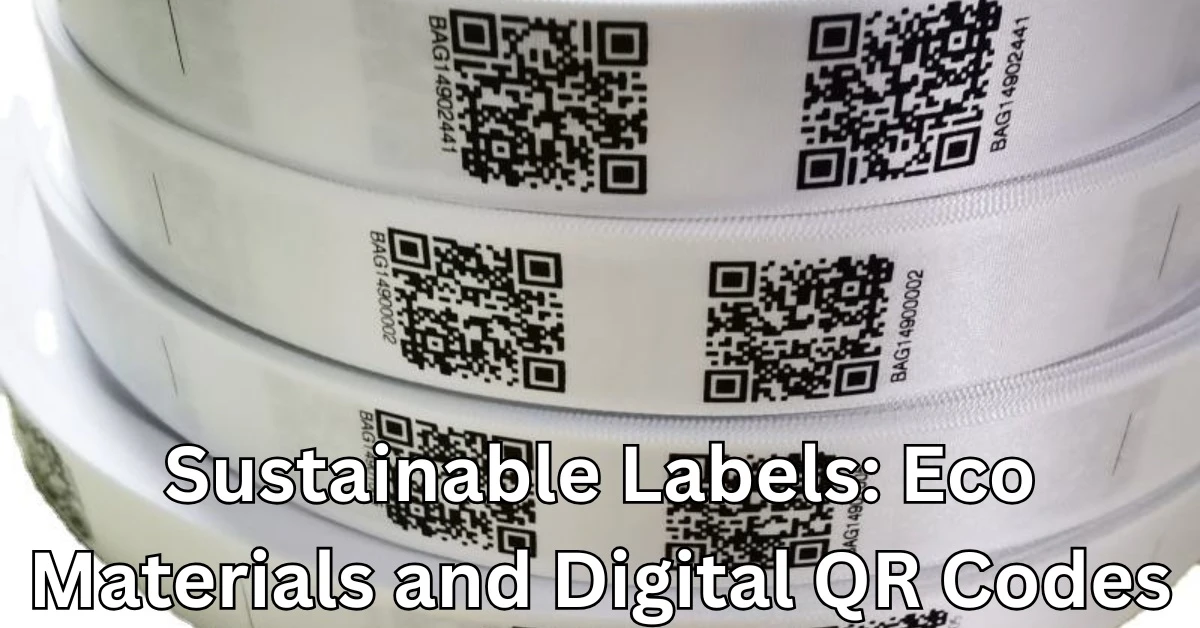
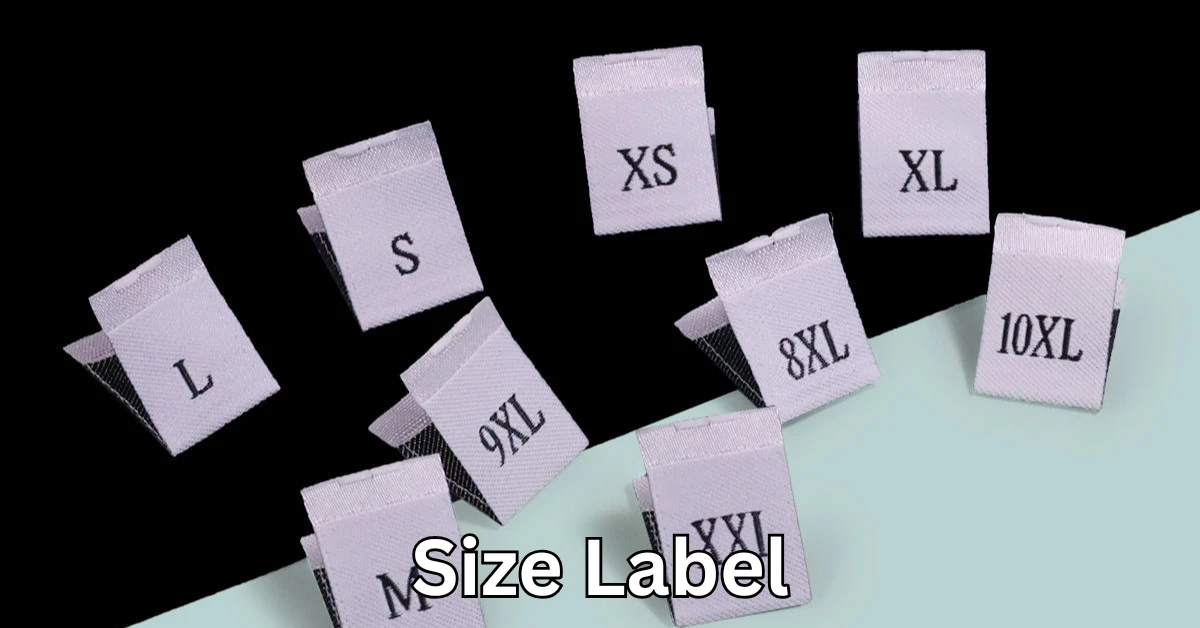
A compliant garment must show:
- Standard reference
- Class level
- Material type
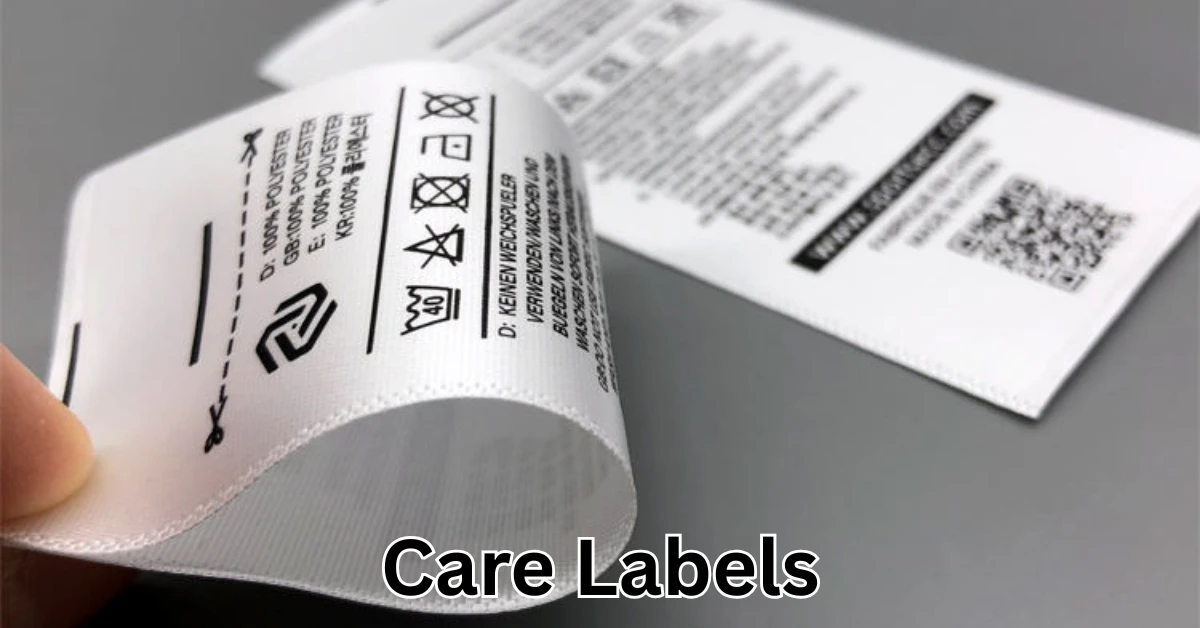
- Care instructions
Manufacturers should always test for photometric levels, colour fastness, abrasion, and wash durability. That test report is the garment’s passport.
Quick Compliance Checklist
- Choose the correct standard (ANSI/ISEA 107, EN ISO 20471, CSA Z96, AS/NZS).
- Check reflective brightness values.
- Confirm 50 mm trim width.
- Ensure seamless 360° layout.
- Verify durability after wash/UV exposure.
- Demand supplier test certificates.
- Label garments correctly.
Conclusion
Hi-vis trims may look simple, yet they hold the power to prevent accidents, improve visibility, and meet strict compliance rules. When chosen correctly and tested properly, these trims turn garments into life-saving tools. I’ve seen factories debate over a 3 mm trim gap like it’s a national crisis, and honestly—they’re right. Safety hides in the details. And hi-vis trims prove it every single day.
FAQs
1. What materials are commonly used for hi-vis trims?
Polyester fabric with micro-glass bead reflective coatings or prismatic reflective layers is the most common.
2. Why are hi-vis trims usually silver?
Silver reflects the widest range of light wavelengths, giving the strongest visibility under headlights.
3. Can hi-vis trims fail a standard after washing?
Yes. Poor quality trims lose brightness quickly. Always check wash-durability ratings.
4. Do accessories like caps or gloves need hi-vis trims?
Some industries require them, especially for night-shift workers or rail environments.
5. Can fashion garments use hi-vis trims?
Yes. Many brands use reflective trims for style, but fashion trims are not automatically safety-rated unless tested.



Comments - 00
Leave A Reply
Thanks for choosing to leave a comment.