




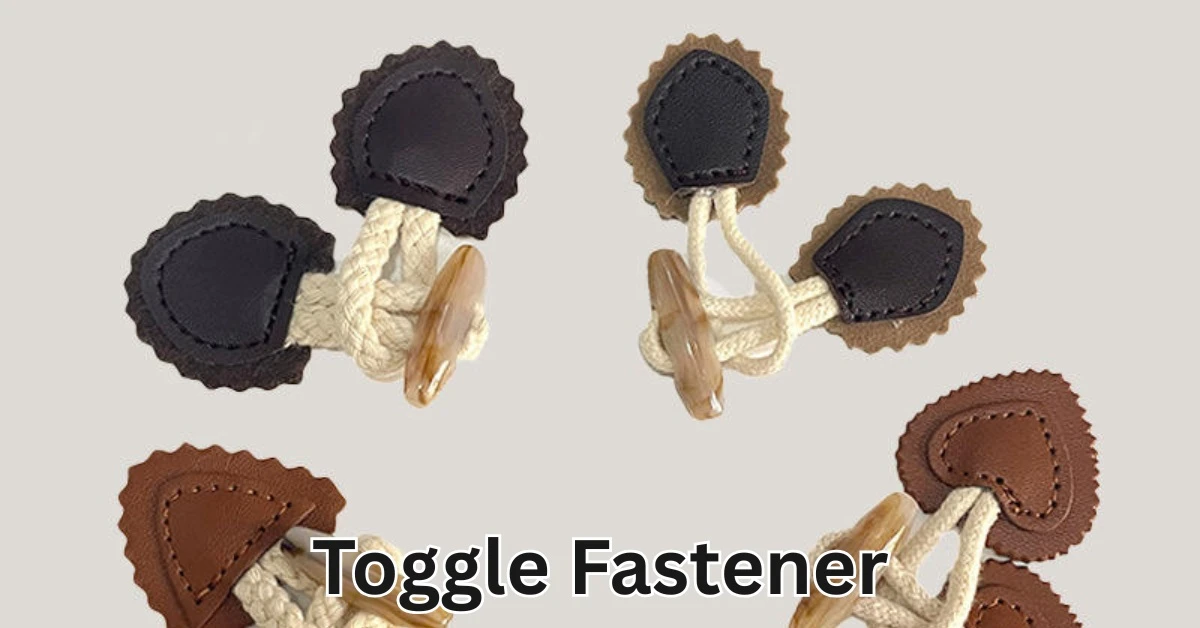
You probably touch a toggle fastener more often than you realize. It sits on your jacket or bag, acts like it owns the place, and somehow makes closure look effortless. A toggle fastener depends less on mechanics and more on clever design. It offers a clean, secure, and reliable closure for outerwear and accessories. Many brands use toggles because they add style with simplicity, and style never goes out of fashion.
Table Of Contents
- What is a Toggle Fastener
- Types of Toggle Fasteners
- Why Toggle Fasteners Matter in Jackets
- Toggle Fasteners for Bags
- Materials Used to Make Toggle Fasteners
- How Toggle Fasteners Are Attached
- Toggle Fastener vs. Button vs. Zipper
- Common Applications in Fashion & Accessories
- How to Choose the Right Toggle Fastener?
- Conclusion
- FAQs
What is a Toggle Fastener
A toggle fastener refers to a closure system that uses a bar-shaped piece and a loop. The bar slips through the loop to lock the garment or bag. It works on simple leverage. No fancy engineering. No hidden springs. Just physics.
What do Toggle Fasteners Look like?
Most fasteners contain:
- A bar (2–5 cm long on average)
- A cord, tape, or loop
- A reinforced base
Key Components
- Toggle body
- Loop or cord
- Stitched or riveted backing
Each part adds strength. A toggle must withstand at least 15–40 N of pull force, depending on jacket type.
Types of Toggle Fasteners
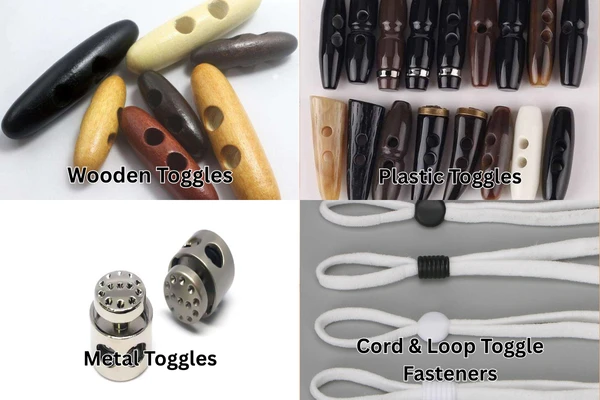
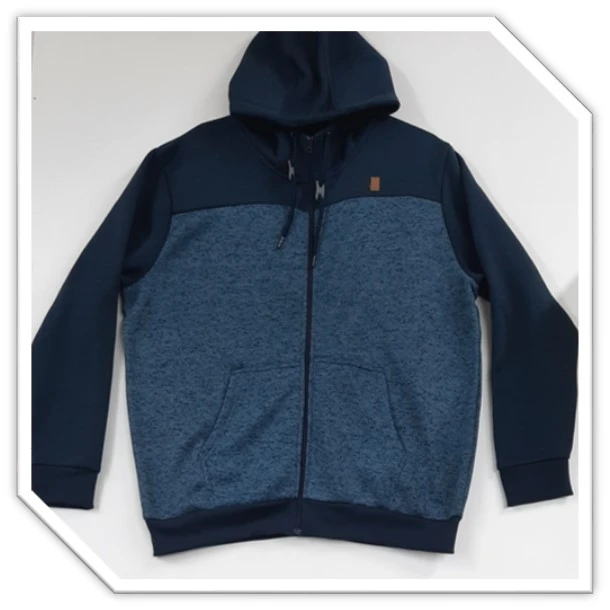
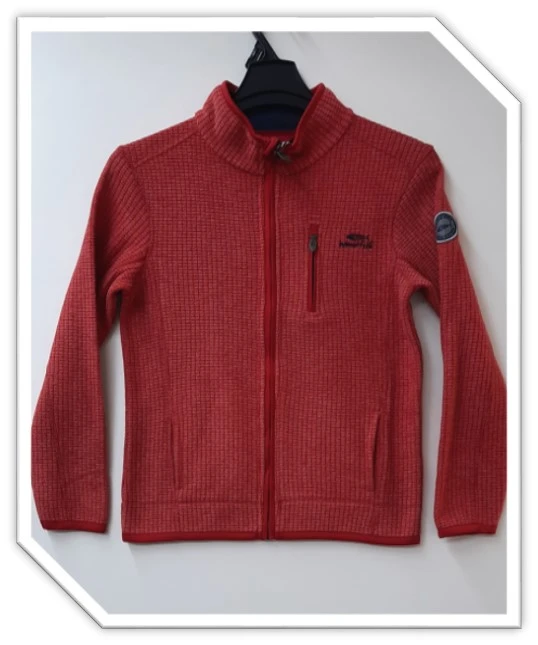
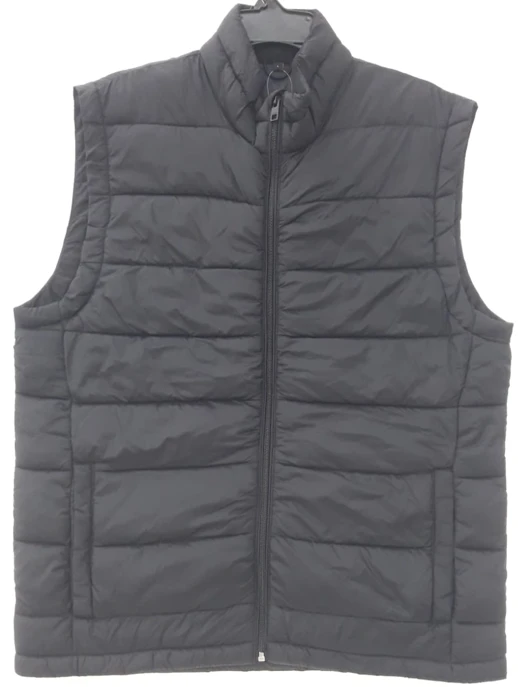
The fashion industry uses several toggle variations to match different materials and styles.
1. Wooden Toggles
These appear in duffle coats. A single wooden toggle may weigh only 2–6 grams, yet it handles stress efficiently.
2. Plastic Toggles
Lightweight and moisture-resistant. Ideal for wear and sporty designs.
3. Metal Toggles
Strong, durable, scratch-resistant. Used in premium fashion and heavy-duty travel bags.
4. Cord & Loop Toggle Fasteners
These rely on textile cords instead of solid bars. They look softer and suit casual jackets or boho-style bags.
Why Toggle Fasteners Matter in Jackets
Toggle closures serve more than decoration. Many brands choose toggles because they make the jacket more practical.
Practical Benefits
- Easy to open with gloves
- Stronger than buttonholes
- Less prone to jamming than zippers
- Works well in cold climates (−10°C or lower)
Aesthetic Benefits
Toggles add texture and a bold look. A duffle jacket with toggles often sells 20–30% better during winter peaks due to its iconic appeal.
Popular Jacket Designs Using Toggles
- Duffle coats
- Parkas
- Vintage military coats
- Children’s winter jackets
Toggle Fasteners for Bags
Toggle fasteners help secure pockets, flaps, and compartments.
How Toggles Improve Bag Construction
A toggle reduces stress on the bag fabric because it spreads the pull across a wider surface. A single toggle can handle up to 25–50 N, depending on the material.
Bag Styles That Use Toggles
- Leather travel bags
- Canvas backpacks
- Beach bags
- Mini cross-body bags
Materials Used to Make Toggle Fasteners
Toggle fasteners use wood, metal alloys, nylon, ABS plastic, and sometimes bone or horn.
Durability Factors
- Tensile strength
- Water absorption rate
- UV resistance
- Surface friction value
Strength & Performance Data
Average durability statistics:
- Plastic toggles: survive 5,000–7,000 pull cycles
- Wooden toggles: resist 3,000–4,000 cycles
- Metal toggles: exceed 10,000 cycles
How Toggle Fasteners Are Attached
The toggle attachment depends on the jacket or bag construction.
Sewing Method
Most toggles attach through reinforced stitches. Two to four stitch rows increase stability by nearly 40%.
Riveting or Loop Attachment
Some bags use rivet-backed cords for a stronger grip. Riveted toggles resist roughly 60–80 N of pulling force.
Toggle Fastener vs. Button vs. Zipper
- Buttons require precise alignment.
- Zippers jam or break under strain.
- Toggle fasteners tolerate misalignment and rough handling. They strike a balance between style and ease.
Common Applications in Fashion & Accessories
Toggle closures appear in:
- Winter coats
- Rain jackets
- Backpacks
- Travel bags
- Leather goods
- Outdoor apparel
How to Choose the Right Toggle Fastener?
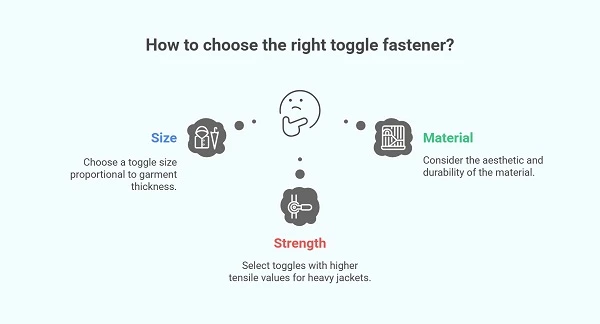
Size
Choose a toggle size proportional to garment thickness. Larger toggles fit bulkier winter coats.
Strength
Heavy jackets require toggles with higher tensile values. Pick metal toggles for rough conditions.
Material
Wood creates a classic look. Plastic suits kidswear. Metal gives durability to premium bags.
Conclusion
A toggle fastener proves that simple ideas often work the best. It uses a bar and loop system to keep jackets and bags secure, stylish, and functional. Many people value toggles because they last long, feel easy to operate, and add character to garments. Whether you choose wood, plastic, or metal, this small accessory changes the way a jacket or bag behaves. That is the charm of a toggle fastener.
FAQs
1. Are toggle fasteners durable?
Yes. Metal toggles survive more than 10,000 pull cycles on average.
2. Can toggle fasteners be used on leather bags?
Absolutely. Many leather makers prefer metal toggles for strength.
3. Do toggles suit lightweight jackets?
Yes. Plastic or small wooden toggles balance well with light fabrics.
4. Are toggles easy to replace?
Very easy. Most toggles take 5–10 minutes to reattach with basic tools.
5. Why are toggle fasteners so common on duffle coats?
They stay functional in cold weather and add the classic duffle look.

Comments - 00
Leave A Reply
Thanks for choosing to leave a comment.