



Table Of Contents
What Are Decorative Motifs?
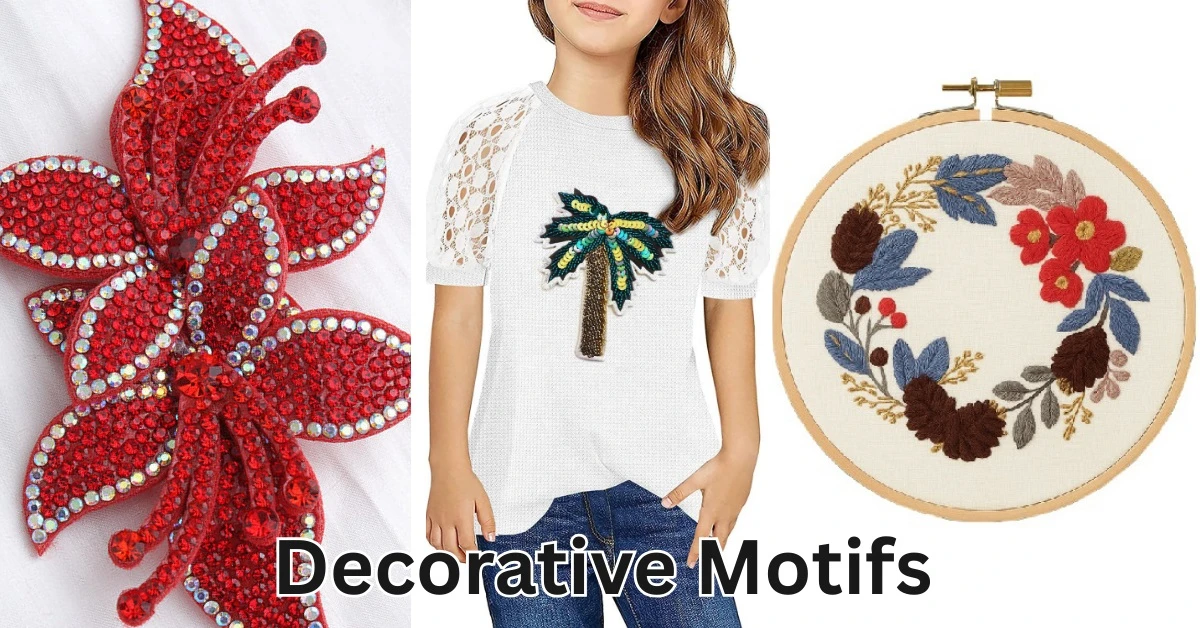
Decorative motifs are recurring visual elements or patterns, like geometric shapes, floral designs, or symbols, used in garments to add beauty. It creates cohesion and conveys cultural, religious, or symbolic meaning. It often repeats to form larger designs.
Decorative motifs are surface ornaments on fabric. They add story, texture, and function. Short answer: motifs turn plain cloth into a craft or product. Designers use motifs to signal brand, region, or trend. Three big families dominate: patchwork, appliqué, and embroidery.
Types Of Motifs
Motifs come in many forms. Each type serves a different visual and functional purpose. As a technologist, I group motifs by origin, structure, and application. This helps during design planning and cost control.


Geometric Motifs
Geometric motifs rely on shapes like squares, triangles, lines, and repeats. Think checks, stripes, chevrons, or tessellations.
- Common in patchwork and embroidery grids
- Easy to scale and repeat
- Reduce fabric wastage by up to 15% due to a predictable layout
Floral Motifs
Floral motifs draw inspiration from nature. Flowers, leaves, vines, and buds dominate this group.
- Widely used in appliqué and embroidery
- Increase visual softness and perceived elegance
- Accounts for nearly 40% of decorative motifs used in women’s apparel
Figurative or Representational Motifs
These motifs show real objects. Animals, birds, human figures, or symbols.
- Popular in folk textiles and storytelling garments
- Often handcrafted due to complexity
- Higher labor cost compared to geometric motifs
Abstract Motifs
Abstract motifs break rules. No direct reference to real objects.
- Common in contemporary embroidery and mixed-media patchwork
- Ideal for artistic or experimental collections
- Allow design freedom with fewer technical constraints
Traditional and Cultural Motifs
These motifs reflect heritage. Paisley, ikat forms, tribal symbols, or regional icons.
- Strong emotional and cultural value
- Frequently protected by design or GI regulations
- Used in premium and export-oriented garments
Functional or Branding Motifs
These motifs serve identity rather than decoration alone.
- Logos, badges, crests, and emblems
- Mostly applied through embroidery or appliqué
- Must follow strict size and color tolerance
Why Motifs Matter
Numbers help. A small panel with motifs can raise perceived value by 20–60% in retail. Motifs also affect labor cost. Handwork can add 2–10 USD per piece. For industrial runs, embroidery machines reduce unit cost by 50–80% compared to hand labor. That matters for manufacturers and small studios alike.
Patchwork: Structure, Methods, And Uses
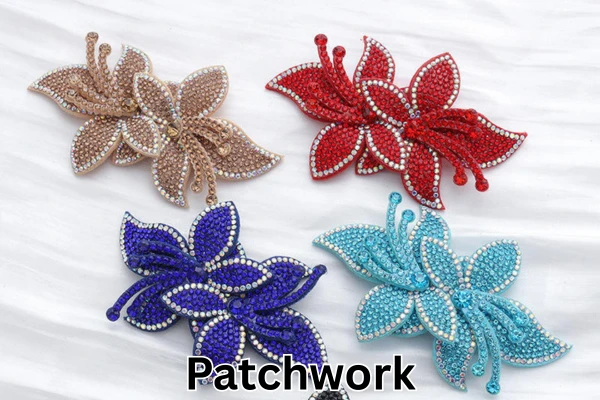
Patchwork joins many fabric pieces into one surface. Think quilt blocks or fashion panels. Patchwork gives structure. It also saves waste and supports recycling.
Common Patchwork Techniques (3 Main Types)
- Pieced patchwork: precise geometric blocks. Use when repetition and scale matter.
- Crazy patchwork: random shapes and textures. Use for art pieces and boho products.
- Log cabin and sash: linear strips that create strong visual lines. Use for upholstery or bags.
Tools And Materials
- Rotary cutter and ruler.
- Patchwork foot for the sewing machine.
- 100% cotton thread for stability.
- Lightweight interfacing for thin fabrics.
- Accurate seam allowance gauge (commonly 1/4 inch).
Appliqué: Attachment, Styles, And Tips
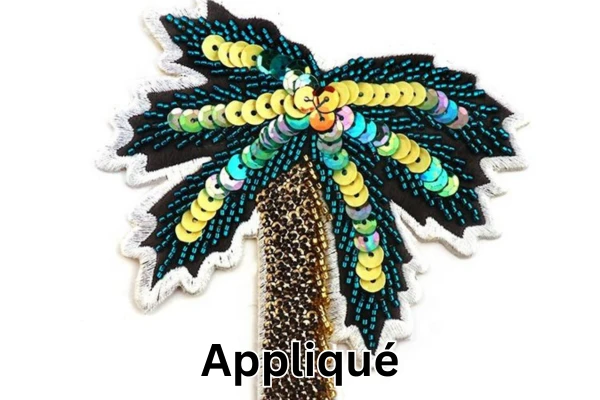
Appliqué means attaching a shape to a base fabric. The shape can be raw-edge, turned, or fused. Appliqué adds bold graphics fast. It also solves big design problems: cover flaws, add brand logos, or add texture without full fabric changes.
Machine Versus Hand Appliqué
- Speed: Machine is 5 to 20× faster.
- Finish: Hand gives soft edges; machine gives crisp repeat.
- Cost per unit: Hand labor raises the cost drastically for small runs.
- Scale: Machine suits long runs; hand suits limited editions.
Best Fabrics And Stabilizers
- Stable base fabrics: denim, canvas, cotton duck.
- Shapes: lighter cotton or felt for contrast.
- Stabilizers: cut-away for dense stitches; tear-away for light stitches.
- Adhesives: water-soluble glue or heat-bond tape for placement. Avoid heavy adhesives that block breathability.
Motif in Embroidery
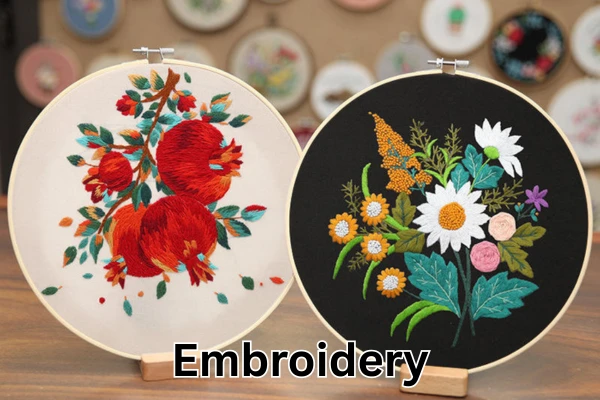
Embroidery adds line, fill, and texture via thread. It ranges from tiny logos to full-body motifs. Choose thread type by wear and wash needs: polyester thread for outdoor wear, cotton for soft hand.
How To Combine Patchwork, Appliqué, And Embroidery In One Project?
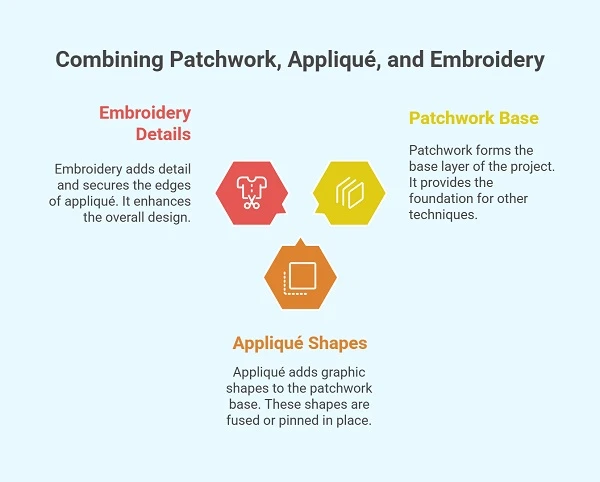
You can layer motifs. Patchwork forms the base. Appliqué adds graphic shapes. Embroidery adds detail and secure edges.
Sample Workflow For A Decorative Panel
- Cut and join patchwork blocks. Check seam alignment.
- Press the panel flat. Use a low-heat iron for delicate fibers.
- Place appliqué shapes. Fuse them with light adhesive or a pin.
- Secure appliqué with a narrow satin stitch or blanket stitch.
- Add embroidered accents: outlines, dots, or texture. Trim threads. Press gently.
This workflow takes about 90 to 180 minutes for a 30×40 cm panel by an intermediate crafter. For factory settings, convert steps into stationized tasks to reduce cycle time by up to 70%.
Care, Durability, And Production Notes For Manufacturers
- Wash tests: Run a 10-cycle wash test on samples. Look for color bleed, fray, and stitch loss.
- Durability: Tight satin stitch prevents edge lift. Use polyester thread for outdoor wear.
- Scaling: For runs over 500 units, choose computerized embroidery and pre-cut appliqué for speed.
- Sustainability: Use offcut patchwork to reduce fabric waste by up to 30% per product line.
Conclusion
Decorative motifs lift a product from plain to prized. Patchwork builds structure. Appliqué adds bold forms. Embroidery brings detail and character. Each technique has trade-offs in cost, finish, and speed. Pick methods by target price, production scale, and brand story. Test samples. Count costs. Then craft with intention.
FAQs
1: Which technique gives the highest perceived value?
Hand embroidery usually. It signals labor and craft. For small runs, handwork can raise retail value significantly.
2: Can I machine-appliqué on knit fabric?
Yes. Use a stabilizer under the knit. Choose stretch-friendly stitches like zig-zag.
3: What thread works best for heavy wear?
Polyester thread. It resists UV, bleach, and abrasion better than cotton.
4: How many stitches per inch for detailed embroidery?
Aim for 5–8 stitches per mm for fine detail. Sample test first.
5: Is patchwork eco-friendly?
Yes, if you use offcuts and recycled fabrics. Patchwork can cut fabric waste by up to 30% in small lines.

Comments - 00
Leave A Reply
Thanks for choosing to leave a comment.