




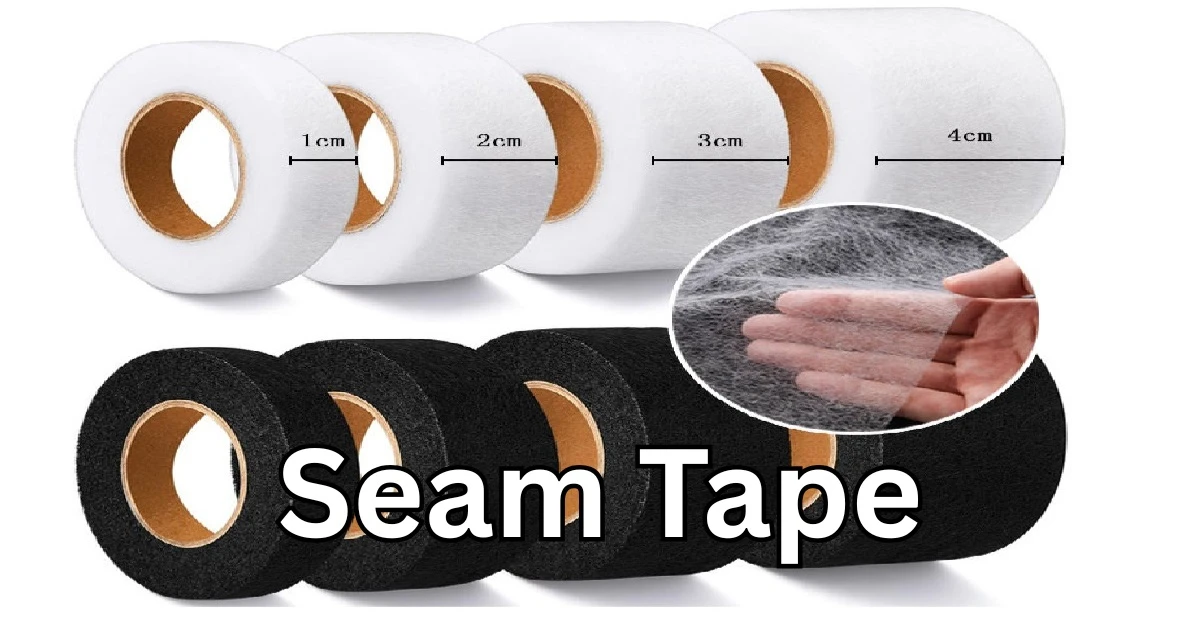
Seam tape is a narrow strip of adhesive film. Garments operator place it over sewn seams to stop water from moving through needle holes. In short, seam tape turns a sewn joint into a waterproof joint. For technical garments, sewn fabric alone cannot meet high waterproof standards. Seam tape fills that gap.
Table Of Contents
Why seams leak (and why seam tape matters)
Sewn seams create tiny holes. Each stitch puncture offers a path for water. A waterproof membrane in the garment blocks water through the face fabric. But stitched seams bypass the membrane. That fact forces designers to seal seams.
Seam types that need sealing
- Seams on hoods, shoulders, and sleeves carry the most exposure.
- Double-needle and flat-felled seams show different leak profiles.
- Critical seam count on a jacket: typical design has 20–40 seams.
What does seam tape do?
Seam tape forms a physical barrier. It bridges the thread channel. The tape has a thin film and a pressure-activated or heat-activated adhesive. Together, they seal the stitch holes and the edges of the seam tape to the fabric.
How taped seams stop water in garments
- Adhesive bonds to the fabric and thread.
- Film blocks hydrostatic pressure.
- Proper overlap covers all stitch lines.
Typical hydrostatic head and why taped seams matter above 5,000 mm
Waterproof ratings use hydrostatic head (mm). Common thresholds:
- 1,500 mm: light rain protection.
- 5,000 mm: moderate rain, hiking.
- 10,000–20,000 mm: heavy rain, mountaineering.
Above 5,000 mm, taped seams become essential for consistent waterproof performance. The membrane can pass tests, but the seams will fail with no tape.
Types of seam tape and adhesive systems
Not all tapes perform equally. Choice depends on fabric, membrane, and use case
A. Hot-melt seam tape
- Adhesive activates with heat (typical range 120–160°C).
- Strong bond on synthetic fabrics.
- Common in mass production.
- Tape width is often 10–20 mm.
B. Pressure-sensitive and solvent-based tapes
- Pressure-sensitive bonds with finger pressure or roller pressure.
- Solvent-based adhesives give long open time for complex seams.
- Some tapes suit low-temperature substrates.
C. Film vs. knitted tape choices
- Film tape gives a full barrier. Best for heavy rain.
- Knitted or porous tape lets breathability remain higher at the seam line. Choose when vapor transfer matters.
How Manufacturers Apply Seam Tape? (Factory Process)
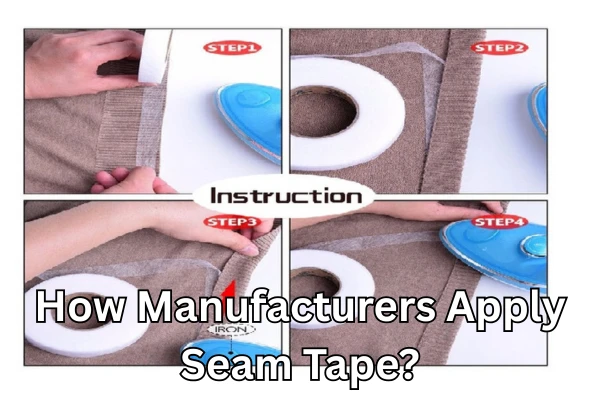
Process matters. A good tape on a bad application fails.
Machine-applied vs. hand-applied
- Machine systems run at 5–30 m/min depending on the model.
- Machines heat and press precisely.
- Hand application offers repair flexibility but lower uniformity.
Quality checks and common specs
- Peel strength test. Typical acceptance: >5 N/cm (varies by spec).
- Seam tensile test. Tape must not split the seam under load.
- Wash cycles: garments are tested for 20 to 50 wash cycles to check longevity.
If you love numbers, you can ask for lab test reports. Most brands list these on tech sheets.
How To Keep Taped Seams Waterproof?
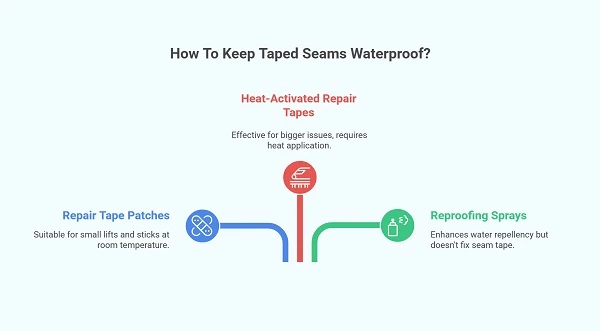
Seam tape can fail after heavy abrasion or many washes. Care helps.
Repairs and re-sealing options
- Use repair tape patches for small lifts. Many field tapes stick at room temperature.
- For bigger issues, use heat-activated repair tapes and a household iron or heat press. Follow temperature guidelines on the repair tape label.
- Reproofing sprays help face fabric repel water, but do not fix seam tape failure.
Buyer’s checklist for technical garments
- Label: “Fully taped seams” or “Taped seams.”
- Waterproof rating: 5,000 mm minimum for outdoor use; 10,000+ mm for heavy conditions.
- Warranty or test data: Ask for wash cycle test counts.
- Repair kit: Does the brand offer a repair tape?
- Breathability needs: If you sweat a lot, consider using knitted seam tape or a known breathable membrane.
Conclusion
Seam tape provides one simple promise: block water at the weakest points. For technical garments, that promise can make the difference between a dry day and a ruined hike. Pick the right tape chemistry for the fabric, check test numbers, and store the jacket with care. You will thank the tape later.
FAQs
1: Do taped seams affect breathability?
Slightly. Film tape adds a barrier at the seam. But designers place tape to minimize vapor bottlenecks. Overall breathability depends more on the membrane.
2: How long does seam tape last?
Typical life equals the garment’s usable life under normal wash and wear. Many tapes withstand 20–50 wash cycles. Heavy abrasion shortens life.
3: Can I repair seam tape at home?
Yes. Use a field repair tape for small defects. For a stronger fix, use heat-activated repair tape and follow temperature guidelines.
4: Is “seam sealing” the same as “seam taping”?
Often, yes, in consumer language. Technical teams may distinguish methods by adhesive system or application tool.
5: Does every waterproof jacket need seam tape?
No. For low-exposure garments (light shell, daily wear), manufacturers sometimes skip full taping. For true waterproof performance, choose “fully taped seams.”


Comments - 00
Leave A Reply
Thanks for choosing to leave a comment.