


Table Of Contents
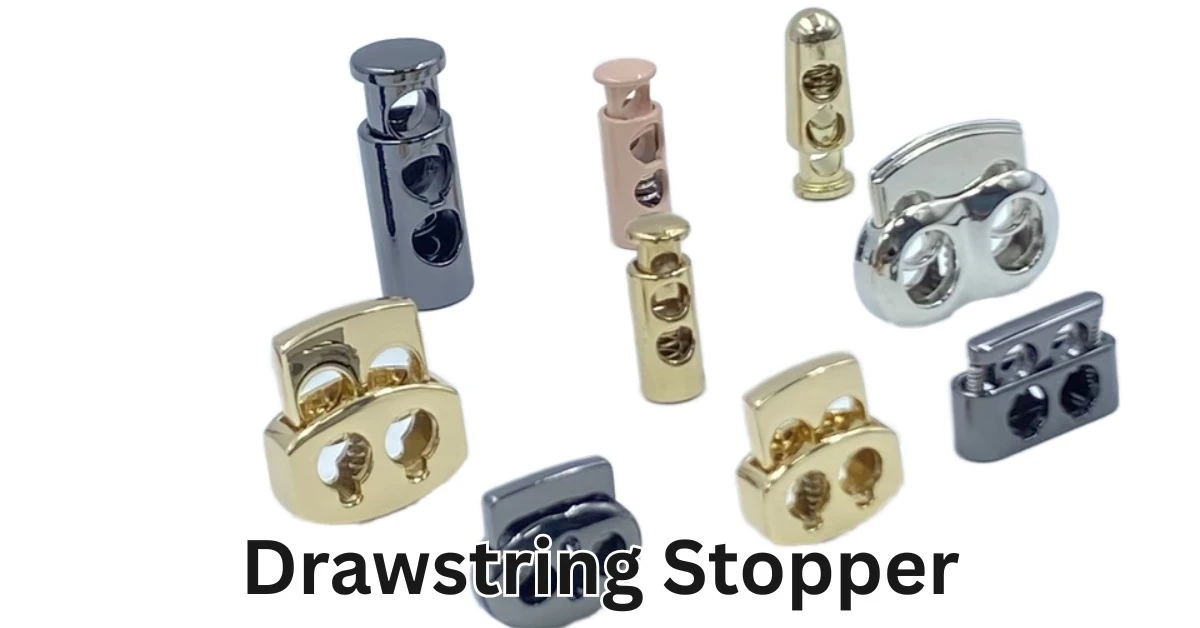
What is a Drawstring Stopper?
A drawstring stopper, also called a cord lock, toggle, or drawcord adjuster, holds a cord at a set length. It saves time. It keeps fabric tidy. Protects the user. It prevents loss of items inside bags. Simple. Effective.
A stopper has 3 parts in many designs: body, mechanism, and exit holes. The mechanism can be a spring, button, magnet, or a simple knot. Most users need the stopper for one or two tasks. Choose the right type and material for each task.
5 Types Of Drawstring Stoppers
1. Spring-loaded Barrel (Toggle)
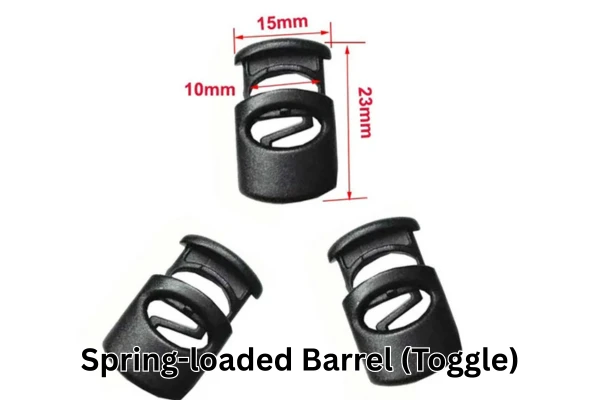
- Description: Cylinder shape. A small spring sits inside. Press the top to open. Release to lock.
- Key numbers: 80% of general-purpose cord locks fall in this category in many supply catalogs. They handle cord diameters from 2 mm to 8 mm.
- Best for: Jackets, backpacks, sports bags
- Weakness: Spring failure after heavy use or salt exposure.
2. Button Toggle
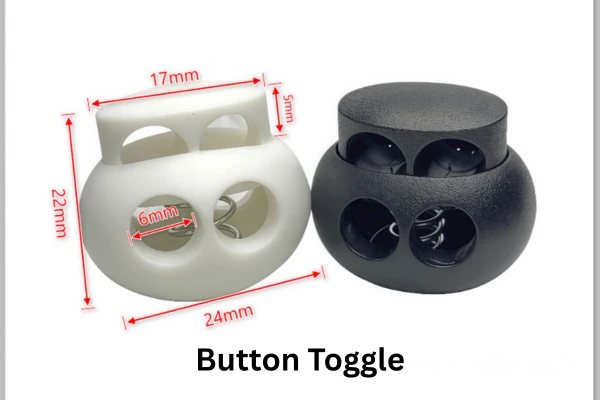
- Description: One-piece design. Push the button, then pull the cord. No separate spring in many models.
- Key numbers: Found in 40% of low-cost garments. Typical lifespan: 1–3 years in heavy use.
- Best for: Light garments, kids’ wear, quick-fit hoods.
- Weakness: Less secure under high load.
3. Auto-lock Cord Lock
- Description: Internal teeth or wedge grip. Cord slides; stopper locks automatically under tension.
- Key numbers: Handle cords of 1.5–6 mm. Grip force can reach 10–20 N depending on design.
- Best for: Workwear, safety gear, ropes for small loads.
- Weakness: Teeth can cut soft cords over time.
4. Barrel Knot & Cord End (Non-mechanical)
- Description: No hardware. A knot, melted end, or heat-shrunk sleeve acts as a stopper.
- Key numbers: Cost per unit: near $0.00 to $0.05. Very common in low-cost production.
- Best for: Budget goods, disposable items.
- Weakness: No quick adjustment. Replacement requires a new knot or sleeve.
5. Magnetic And Specialty Stoppers
- Description: Rare designs. Magnetic lock or custom fashion stoppers.
- Key numbers: Market share under 2% generally trims the market. Higher price per unit.
- Best for: Premium bags, tech accessories, luxury garments.
- Weakness: Cost and complexity.
Common Materials And Their Advantage/Disadvantage
Plastic (Nylon, Polypropylene)
- Pros: Low cost. Low weight. Good chemical resistance.
- Cons: UV can weaken some types. High temperatures deform plastic.
- Use cases: Outdoor gear, children’s wear, mass-market apparel.
Metal (Aluminum, Stainless Steel, Zinc Alloy)
- Pros: High strength. Premium look. High heat tolerance.
- Cons: Cost is higher by 3–10x versus plastic. Added weight. Possible corrosion if low-grade metal is used.
- Use cases: Heavy-duty bags, safety gear, fashion brands.
Silicone And Rubber
- Pros: Soft touch. Good grip. Weather-resistant.
- Cons: Less rigid. May age with UV exposure.
- Use cases: Activewear, baby products, and waterproof items.
Natural Materials (Wood, Leather)
- Pros: Eco-appeal. Unique look.
- Cons: Higher cost. Less weather resistance.
- Use cases: Handcrafted bags, boutique garments.
How To Pick The Right Stopper?
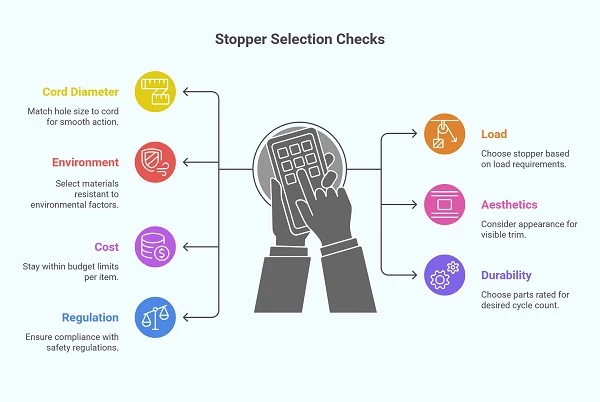
- Cord diameter. Match hole size to cord. A 3 mm cord needs a 2.8–3.2 mm hole for smooth action.
- Load. Low load: button toggle or knot. High load: metal or heavy-duty spring lock.
- Environment. Salt air or chemical exposure: pick stainless steel or UV-stable nylon.
- Aesthetics. Visible trim: choose metal or coated silicone.
- Cost per unit. Budget limit set per item. Plastic ≈ $0.02–$0.30; metal ≈ $0.30–$1.50.
- Durability target. For daily use, choose parts rated for 10,000 cycles if possible.
- Regulation. Child garments require safe, non-toxic materials. Check local rules.
Installation, Maintenance, And Lifespan
Installation is simple. Thread the cord through the stopper hole. Tie the end or add a crimp. For spring locks, avoid salt and grime. Clean with fresh water after heavy sweat or salt exposure. Replace a failed stopper as soon as slippage appears.
Expected lifespan: low-cost plastic, 6–24 months under heavy use. Metal stoppers can last 5+ years with care.
Application
Common applications: outerwear, backpacks, hoodies, masks, sport gear, shoe laces, and pet gear. A trim buyer at a mid-size factory might order 10,000 stoppers per month. Small brands order 500–2,000 per SKU run. These numbers show scale differences. Cost control matters. A small error in choice can add $0.10 per unit and cut the margin by 5–15%.
Quick Troubleshooting
- Slippage. Check cord diameter and stopper teeth. Replace if the teeth dull.
- Spring failure. Swap to a stainless steel spring or choose a non-spring design.
- Breakage. Choose metal or reinforced nylon.
- Aesthetic fade. Choose UV-stable material or coated finish.
Conclusion
A drawstring stopper looks small. Yet it affects function, safety, and style. Pick the right type by checking cord size, load, and environment. Choose material based on durability and budget. Small choice. Big difference.
FAQs
1. What stopper type works best for hiking backpacks?
Choose a heavy-duty spring-loaded or metal auto-lock. Aim for parts that resist salt and dirt.
2. Can I replace a failed plastic stopper with a metal one?
Yes. Check cord diameter and adjust end crimp if needed.
3. Which material holds up best in seaside climates?
Stainless steel or UV-stable nylon. Avoid untreated zinc alloys.
4. Are specialty magnetic stoppers practical?
They work well in premium items. Cost per unit can be 3–10 times higher than plastic.
5. How to test a stopper before production?
Run 1,000 open/close cycles. Test under wet and dry states. Check lock force and visual wear.

.webp)

.webp)
.webp)
Comments - 00
Leave A Reply
Thanks for choosing to leave a comment.